Microphones
SM7B–
This mic is a fan faverout for most podcasters due to its durable build and high SPL. It is renowned for its strong build quality, minimal room noise, and clear detailed sound, all of which seem to make it perfect for recording vocals with loud dynamics which is common in mosts podcasts. My podcast is more relaxed though so it’s not necessary to have the extempley high SPL. Its negatives are its extremely low output. Many favour large diaphragm condencer microphones in more controlled environments but the SM7B dominates in envirements where feedback is likely with more sensitive mics. Condencer mics are also far more delicate than dynamic ones such as the SM7B with the inside components esaly breaking when dropped.
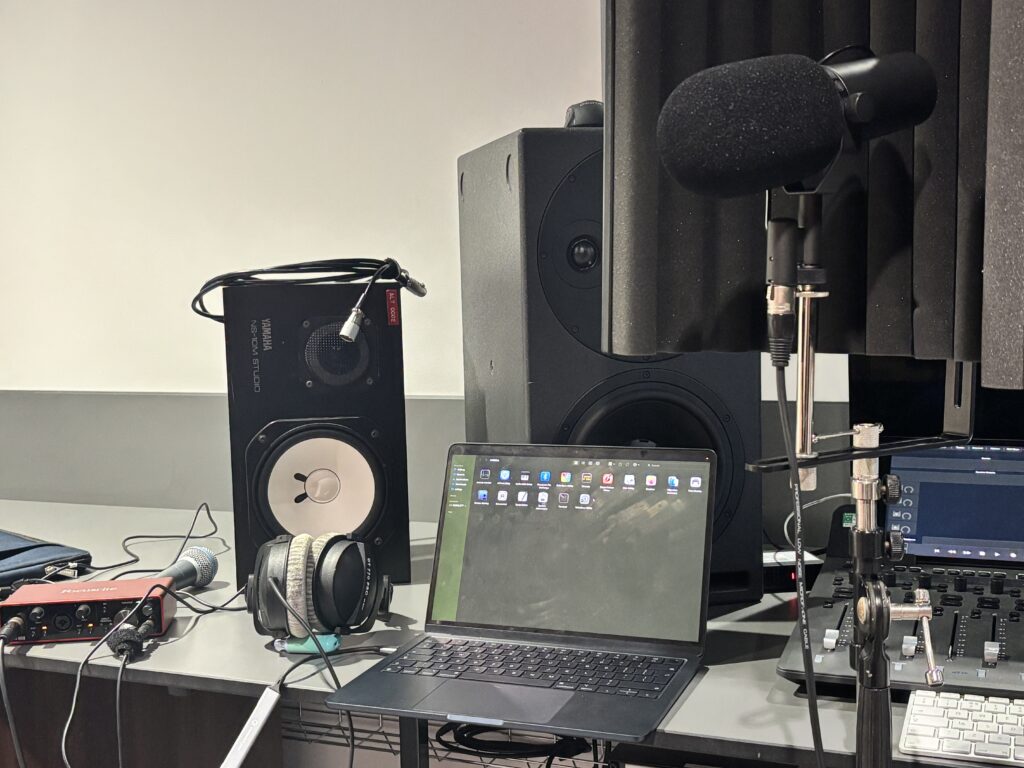
This image shows the setup I used during my practice recording. I discovered it was an absolute workhorse and lived up to its reputation but there where some arias where I felt it fell short. It had to be positioned very close to me to avoid sounding thin (around 6 inches) which got in the way when I was reading from a script. It also had an awkward XLR positioning and required be to add 60db of clean gain to be herd clearly.
This large diaphragm mic is an incredible high end tool which has many characteristics making it perfect for recording podcasts. One of its very impressive features is its extremely low self noise of about 7 dba, meaning recordings have very little hiss and sound very clear even with distortion added. Its also slightly forward in the midrange which helps it cut-through clearly in spoken word recordings like podcasts.
In comparison to the Sure SM7B, the TLM 103 is a condencer mic rather than a dynamic mic which means it captures more detail and subtle vocal vocal textures. This makes it less forgiving expessually when capturing room noise but if I want a more clear studio sound then the TLM 103 dominates.