Grassroot Origins
As part of my time at Bradford 2025, I get the opportunity to work with a local arts organisation. I was fortunate enough to work with South Square Centre, spending a one day per week helping with different tasks while there.
South Square Centre opened as a gallery in 1982, but was originally a set of workers cottages arranged in a courtyard formation. Post industrialisation, the site was left in dereliction, until a group of 30 people and graduate students from Bradford College restored the building to accommodate gallery spaces and community gatherings.
Today, South Square Centre hosts many community events and workshops alongside their galleries and exhibitions. One event that I was granted agency over was during Thornton Art Trail, where the whole Village was invited to engage with art and sculpture.
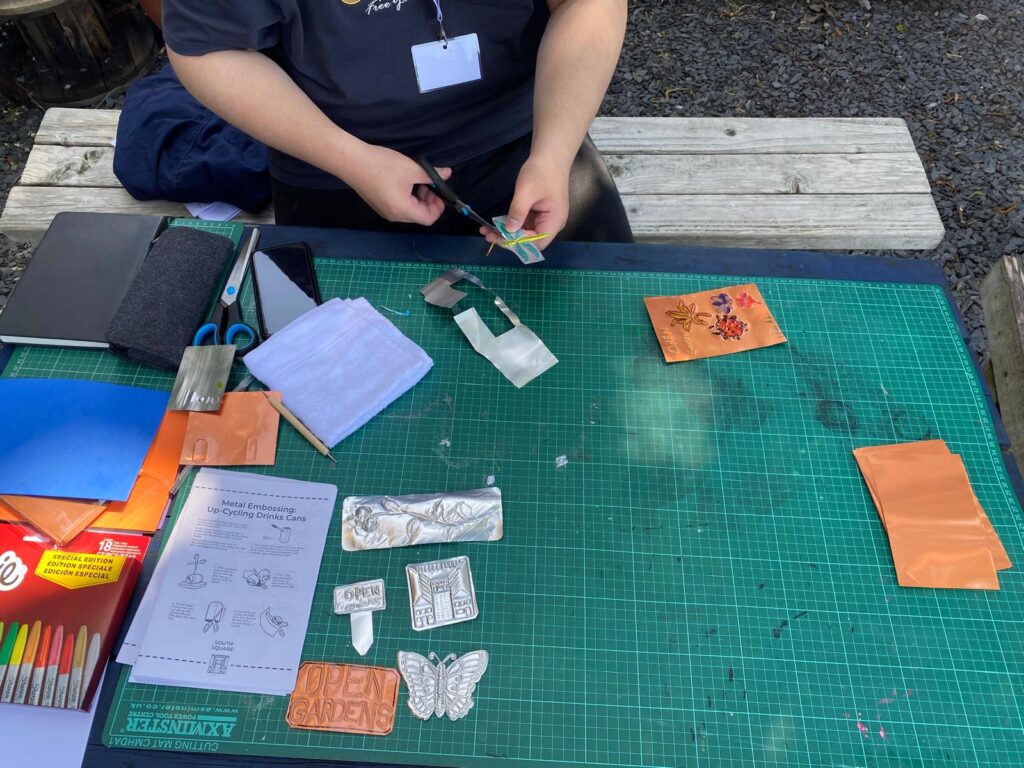
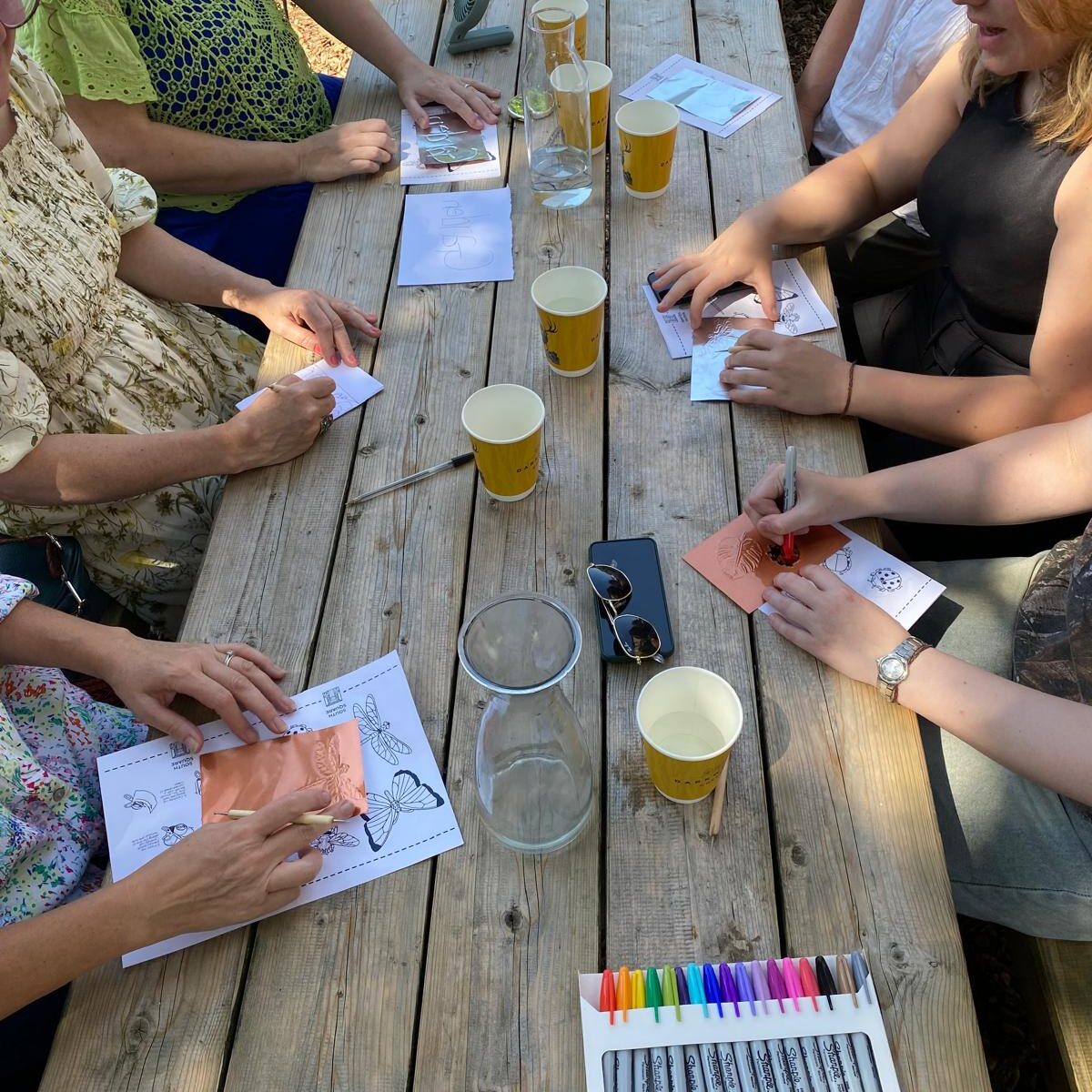
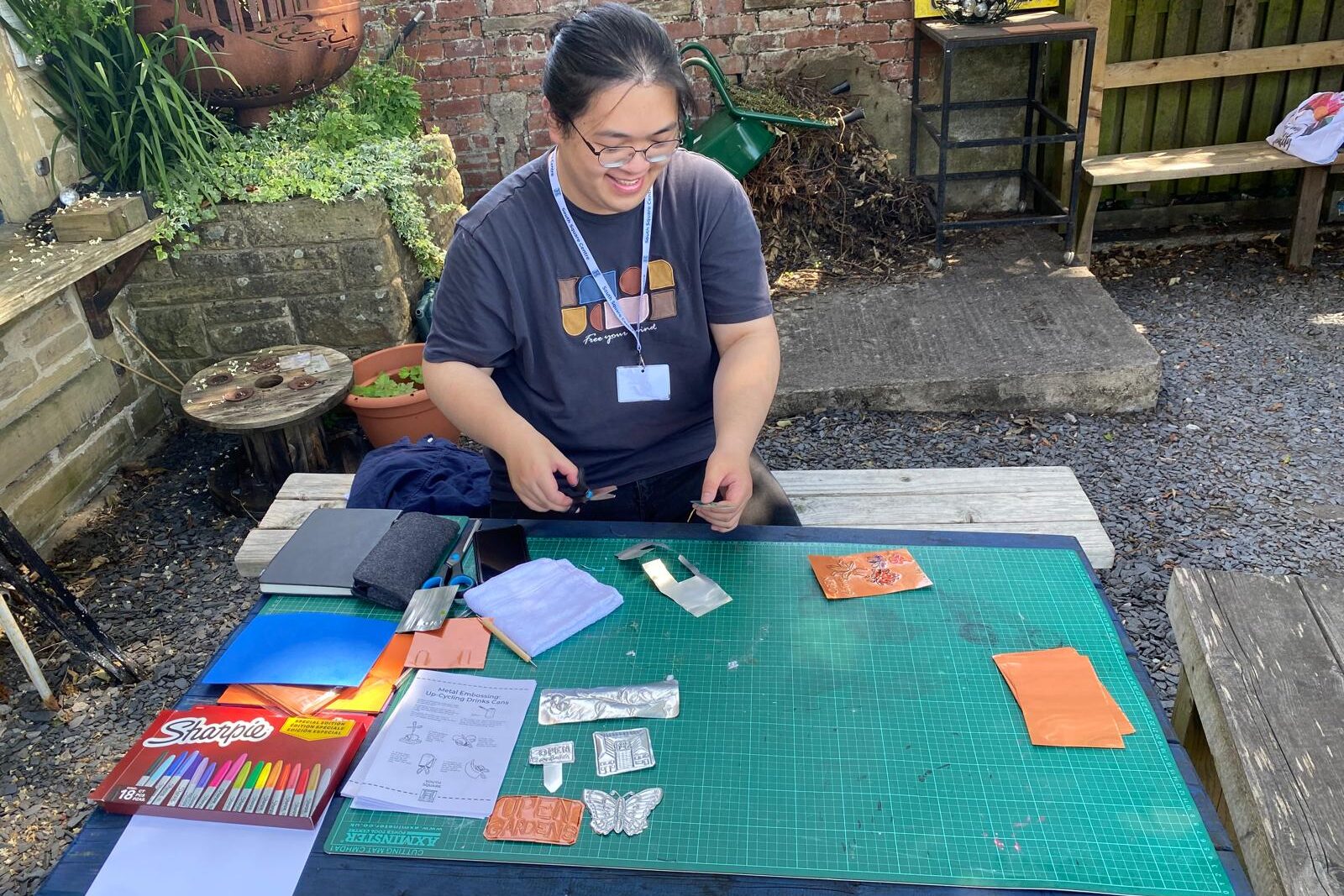
As part of South Square’s programme, I ran a metal embossing workshop to engage participants with upcycling materials through crafts.
Metal Embossing Workshop
The inception of the workshop involved reviewing my own skill sets as well as evaluating what is most feasible for the average participant to do. For example; is it safe enough? How suitable is it for guests? Is it something people will want to try again?
To ensure the workshop was safe enough, participants were provided with a sheet of pre-cut aluminium metal where they can emboss patterns onto. to make sure everyone is able to participate, additional provisions needed to be sourced, such as sculpting/ embossing tools.
As the original initiative was to promote upcycling in a creative way, I needed to include a way to teach people how to do so. Thus, one of the outputs that I prepared for the workshop was an instructional leaflet, containing details of how to deconstruct a metal drinks can, some embossing techniques and a few templates which goes with the outdoors themes of Gardens.
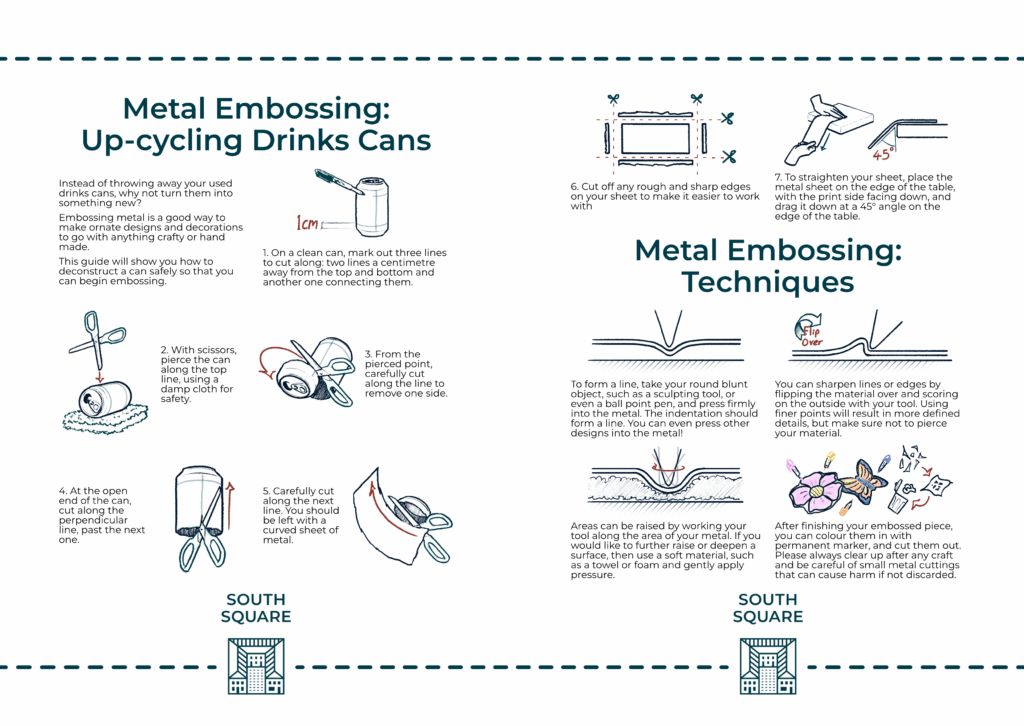

Through the facilitation of this workshop, I have gained a lot of valuable experience on how to run an arts and crafts. Some skills include leadership, safeguarding, instructing and creative teaching. On top of these, I was also able to work on my graphical presentation skills through drafting a printable leaflet that people were able to take with them, that looks professional and creatively influenced.
These are all things that I would be doing within my design business, although if I were to do this again, I would implement the method of craft into its subject matter, which would aim to connect people with the craft in a holistically engaging way. For example, could the designs being embossed relate some way to the material? It could link to a number of things such as the origins of the craft, the act of upcycling, even how we are manipulating the material.
Website Building
An important asset to any contemporary business is their website, as having a presence online is important in reaching audiences.
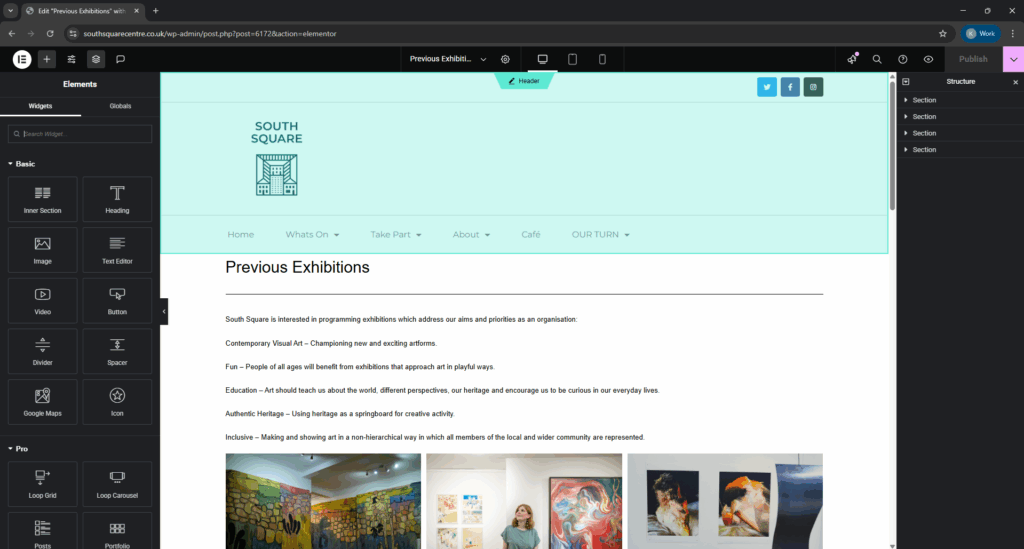
Part of my work as South Square involved adding new pages to their website, such as an archive section for old exhibitions to be accessible and a series of pages detailing case studies on South Square’s own outreach projects.
This experience with building their webpage has developed my own website making skills, on top of general presentation and ordering of information to make things accessible to all users.
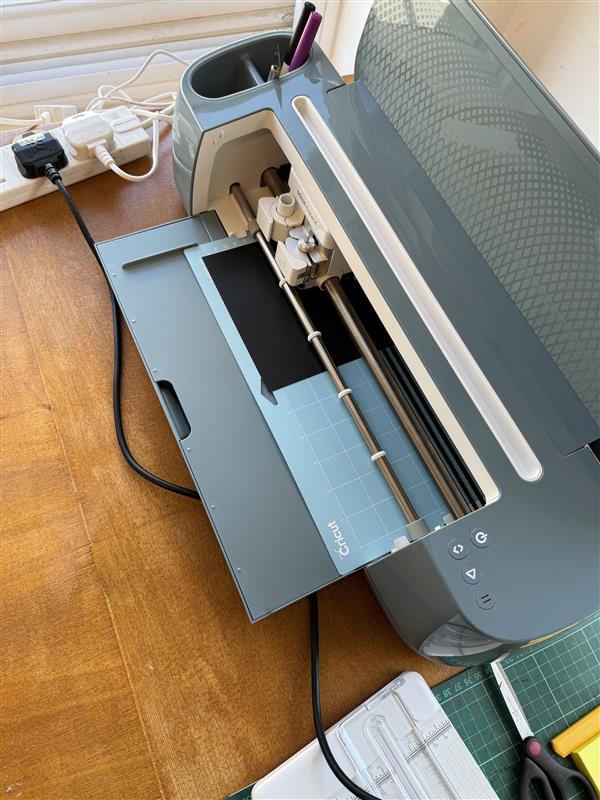
The software provided was able to break down images by colour and automatically outline the objects without needing a vector layer. This has been a fun and interesting experience using CNC machines in a practical context which I would have only used for school assignments before. I’ve gained vital insight into how I could apply CNC machine usage for my business as a designer for architectural and structural projects.
Following this, I would like to experiment with paper and card to test what 3D structures can be made, which would aid in spatial design.
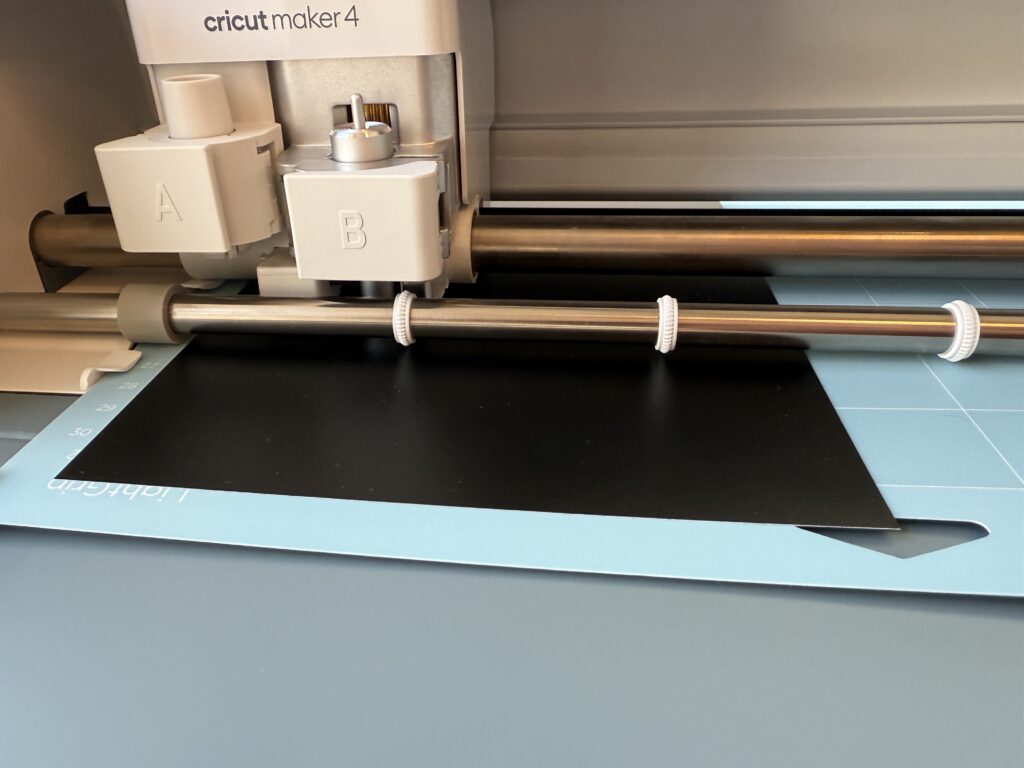
Cricut Maker 4 – CNC Machines
South Square Centre houses many studio grade equipment, such as fabric printing studios and a RISO printer. A recent addition to their equipment is a Cricut Maker 4, which I have been leading on setting up.
As I have used a laser CNC machine before, I was equipped with standard industry knowledge on how to operate it. While the Cricut 4 does not use laser technology, it is essentially a single blade die cutter, with the user needing to provide the cutting data electronically instead of using a premade physical die. In a lot of ways, I found it similar to using a laser cutter but without the laser.
This came with its own parameters to get used to though. while a laser would move across the material, the blade on this machine only moved in one direction, with the blade spinning to change the direction of cut. How 2 dimensional cuts are made is by the cutting bed moving itself. With both moving in tandem, they are able to cut out intricate shapes designed beforehand.