Evaluation

Overall, I think my project went well. There were lots of mishaps in organisation and scheduling, which is a fault on my part and something I need to improve on in the future.

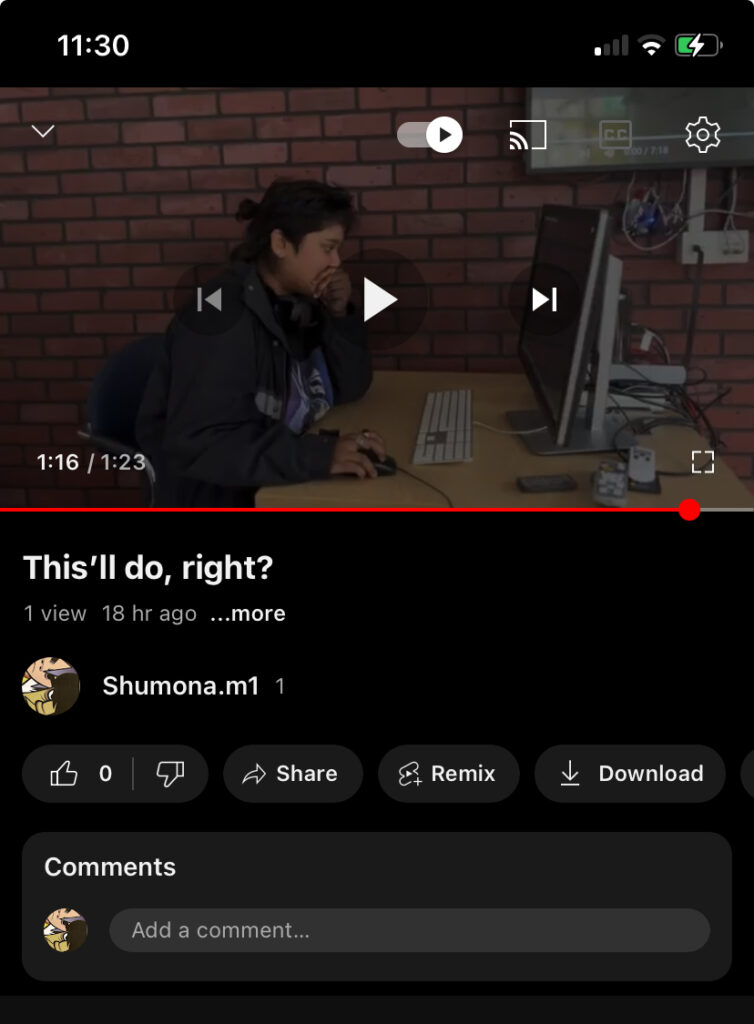
With the deadline coming soon I made sure to upload the film on YouTube. I made sure to export it in time to be able to upload it.

During this project, the thing I enjoyed the most was having lots of ideas and the creativity of my classmates ideas. I liked to see what people wanted to create and how they would do it. I oddly enjoyed helping people out more than my own project. I helped out with scriptwriting, camera work and editing. I know this isn’t good on my part, but I found it more useful for me because I learnt more about working in a team, trying different roles in filmmaking and how I could apply these things in real life. Teamwork was one of the main things I learnt when doing any project. You can’t do a lot if you don’t have a good team.

One of my weaknesses was scheduling and planning. My original film failed because I couldn’t find time to film because of actors failing to show up, not having the right equipment, not having enough props, and myself working part-time meant I couldn’t film on weekends when everyone else was free to film. In the future, I need to create a plan on where and when I need to film and STICK TO IT. Procrastination was one of my enemies and in the end I guess that’s what drove me to make this short film.

Research and Pre-production

For a part of my research I am looking into a website online, ‘Klipist’, which is an online streaming service that select short films from all over the globe covering many topics. The short films will help me with brainstorming and thinking about camera shots/angles when I go onto production.

This website is useful to me because it helps me explore films of all genres and I’m not limited to just one or two genres. It is also a home for independent short filmmakers where they also organise screenings and network events that connect these films to short film lovers.

I like to watch a lot of these films to understand what you need and what it takes to create a compelling short film for your target audience.

I’m first going to outline who and what will be needed for the first part of making this short film. Because it’s an ongoing film from my first one (apocalypse), I will be using the same actors from there to be in my film. In my last project, instead of loaning a camera out, I used my own, which meant I could have a bit more freedom with the amount of time I had with the camera. I’ll be doing the same with this project too.

Because the microphone on my camera isn’t too good, I may loan one out or ask a friend who also has. one for their project. I feel one camera and mic is enough because I only have a little amount of actors for the film.

Location planning – I’ll be filming in all areas of Bradford and mainly at nighttime because of the nature of my short film. I may film some scenes in the college as well because it may be more useful for me when getting the actors together to film little clips.

Risk assessment

Marketing strategies

References

Russell, A. (2021). How to Make a Short Film in Six Simple Steps. [online] Careers In Film | Film Schools & Colleges. Available at: https://www.careersinfilm.com/how-to-make-a-short-film/.

Anon, (2023). 6 Tips for Writing a Short Film that Delivers Big | Klipist. [online] Available at: https://klipist.com/filmmaking-resources/6-tips-for-writing-a-short-film-that-delivers-big/ [Accessed 14 April 2024].

Production

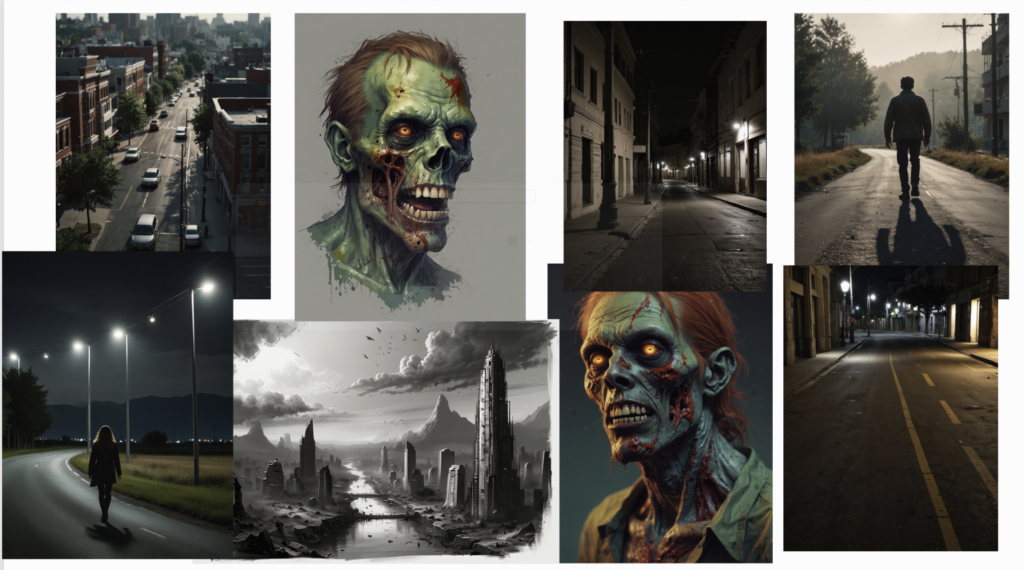
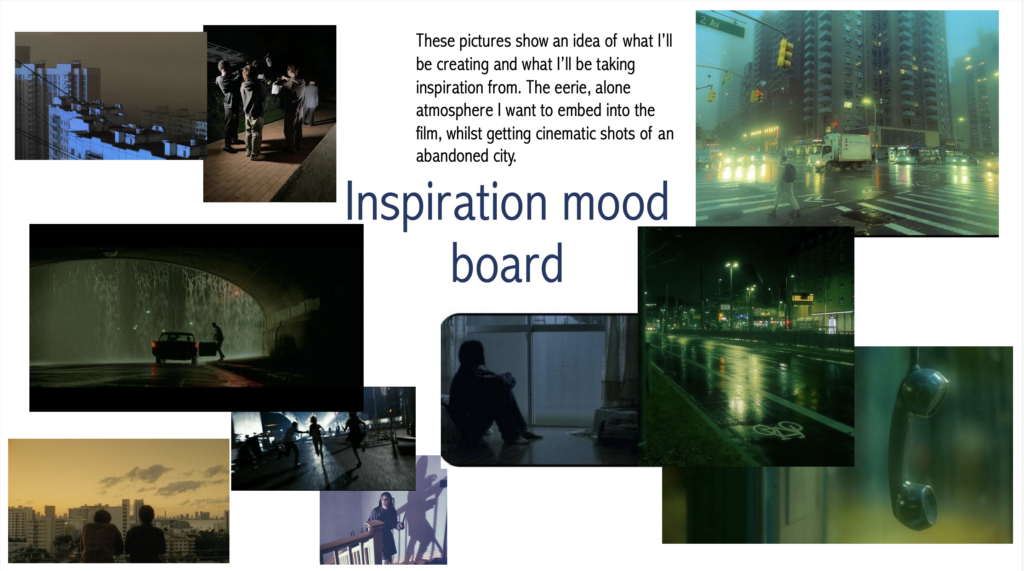
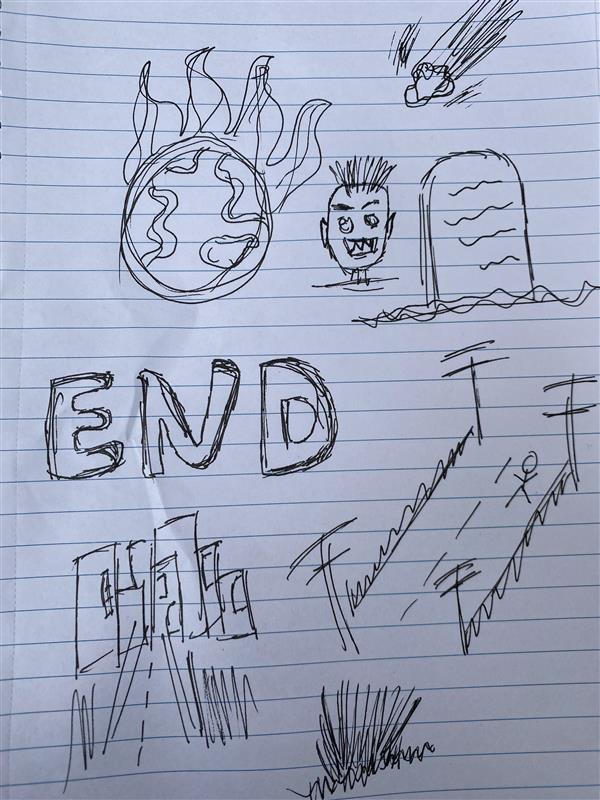
For my production I am preparing by putting together sketches and an inspiration mood board.

These are some design experiments that will help me to picture my short film and put ideas into my mind as I do research and begin filming.

I am starting to edit my film and put together all the new clips. I am incorporating sound effect from Pixabay, using my ow voice recordings and actually using some clips from my first. short film. I’m doing so because the film I’m creating now is a continuation of the first film.

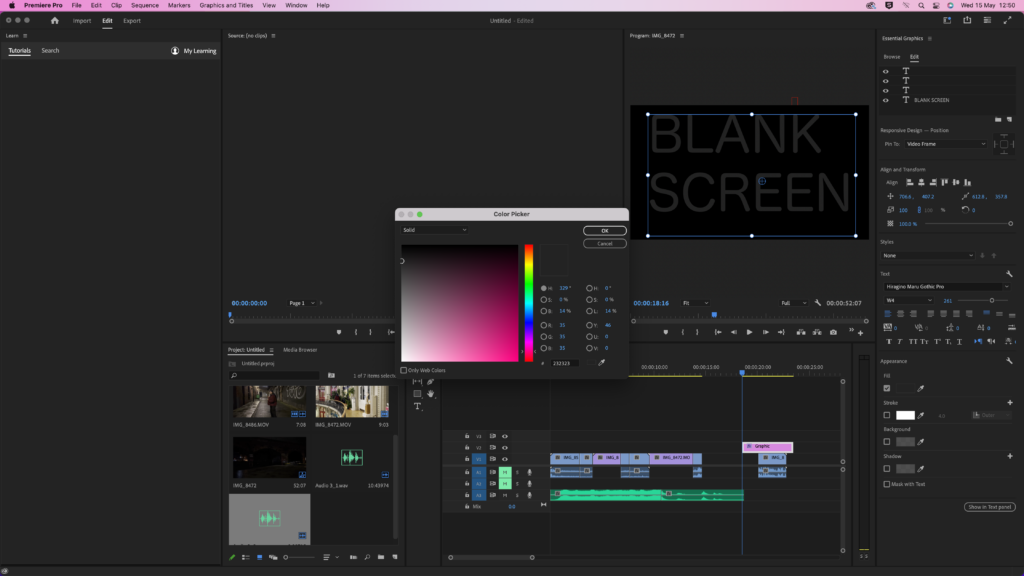
I am using Premiere Pro to edit and also using it to record my voice. Premiere makes it easy for me to do this because I can record using the microphone within the computer, which I can then edit just like any other audio clip.

14/05/24

I was unable to have actors working with me and the timings were wrong which meant I could never film. I managed to get some shots but not enough to make a full film. I’m not happy at all with this and have been cycling through all my other ideas that I was going to do.

I landed on one which I think is creative and one i’ll be able to do. The idea was that I make a film about procrastinating, (about making a film). However, because this is true, I have been procrastinating making the film about procrastination!!

I wrote down that there wouldn’t be too much scriptwriting with this film. I wanted to just film what came to mind – even if I was close to the deadline. I know this wasn’t a smart move but I’m struggling creativity wise and I can’t plan a lot of things this close to the deadline.

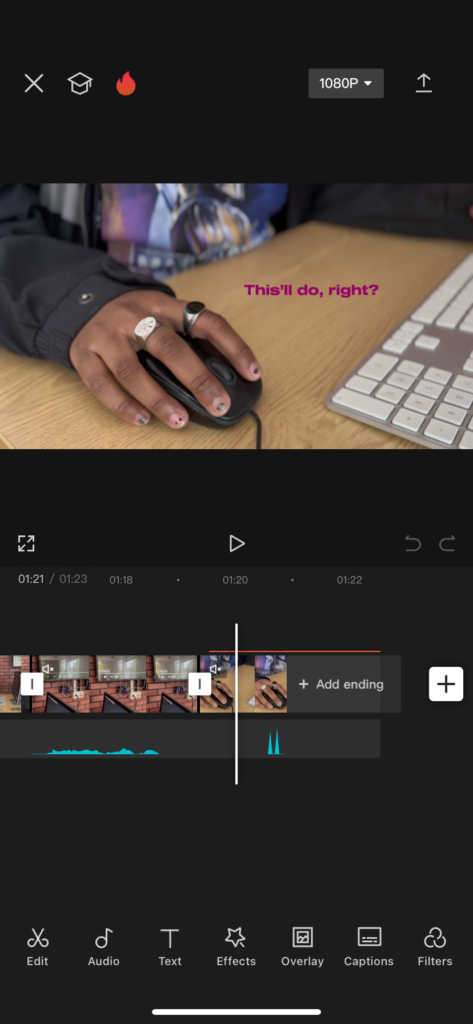
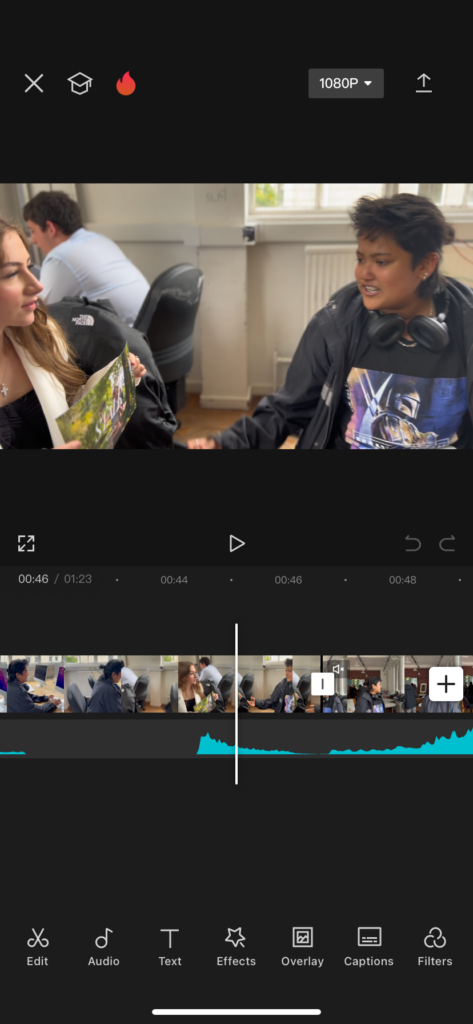
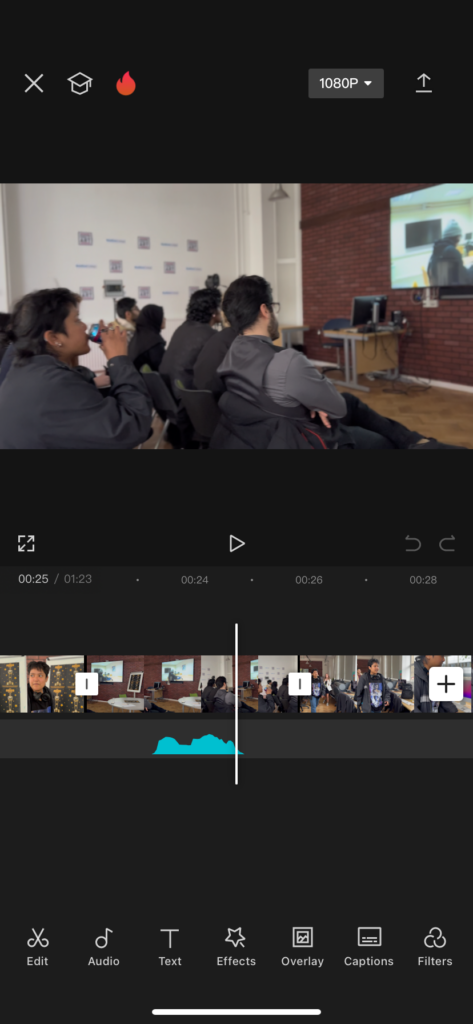
To film, I’m going to use my phone because it has the cinematic option on the camera app, meaning the film won’t be low quality. The better option for me is to edit on my phone because of the timings and not having enough to edit at college. If I could access Premiere Pro at home I would have edited on there. Since I can’t I’m thinking to edit on Capcut and on there I’ll be able to create the video I want.

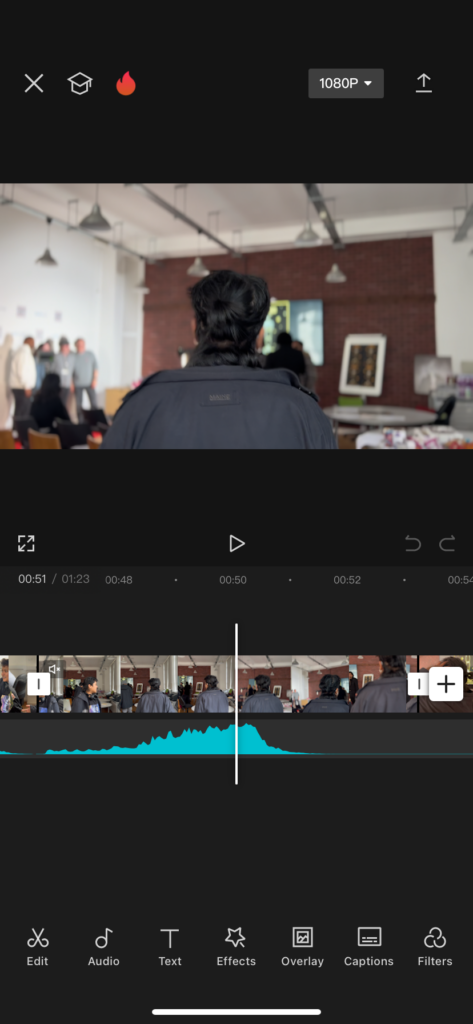
On CapCut, I was able to add sound effects, overlays and text onto the screen. I also used voice isolation to make sure you could hear the voices clearly in some scenes. When adding text I only used it in scene where you could see my ‘thoughts’ on screen.

This editing app also lets you import audio, and also has an option to add sound effects within the app. I used some sounds from ‘pixabay’. Pixabay lets you dowload sounds and use them for free without copyright.

There are sounds I didn’t need to import, such as ‘classroom chatter’ , or just background noise, as I already had that. I asked some of my classmates to take part in the film – most of what they said was improvised from them. I explained what I was filming and they understood.

The cinematic camera on my phone helped a lot with getting different shots and being able to focus on the subject or the background. I was able to have a cameraman with steady hands, who also understood my vision of what this film should have.

Presenting my FMP ideas

26/02/24

I am composing my presentation on Microsoft Powerpoint. I will include:

  • What research I’ll be doing
  • My short film ideas
  • Organisation and planning

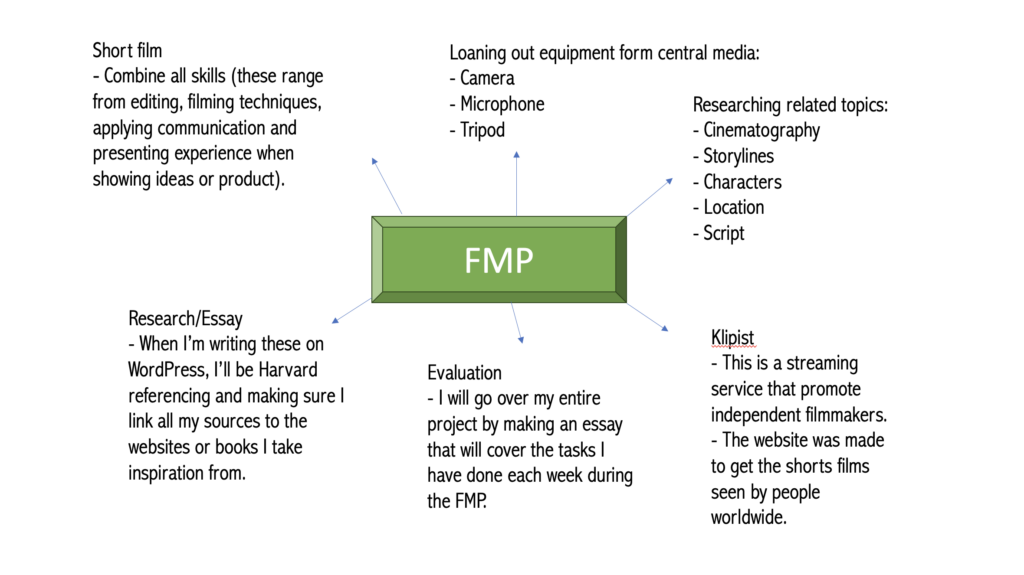
A little mind map I have created to start thinking about the process of the project. The things I have written all important aspects of my project and I need to think of all these when planning and organising every week.

I created this mood board to show what inspiration I have for my short film and an idea of what it’ll look like as the end product. I got these pictures from Pinterest, which is a great source for me when trying to find pictures I need for mood boards.

29/02/24

My presentation is complete and it consists of everything I will be doing / thinking of when I am doing my project. I hope to continue developing my skills further and create a substantial piece of work.

Peer feedback

The main strengths from my presentation was:

One student wrote that the, ‘research was related to my topic and influences my work, she spoke loud and clear and had a planned structure’. The points for development were that I had, ‘not too many images and entertainment within the slides’.

The next student wrote my strengths were ‘very good planning, strong idea and that I have lots of ideas around my project’. The areas for development were that I didn’t, ‘talk loud and clear, and that I should slow down my talking’

The third student wrote that my strengths were that I had a ‘clear aim/ clear goal and that there was a good detail in explanation’. My areas for development were that I should have ‘spent more time on the presentation’

The last student wrote my strengths were, ‘good presentation, very detailed and that I developed by looking at my previous projects’. My areas for development were that my presentation, ‘should have had more images. and that it was quite quick’.

Most of these had similar points when talking about my strengths and weaknesses. One of my better skills are good planning/ organising, details, and having a structure. A lot of points for my weaknesses were that I should not rush when doing my presentation and possibly have a longer presentation.

I managed to include a lot of important aspects in my presentation and I showed that I can showcase my ideas and research whilst giving a lot of information.

Q+A

Q+A Nayan Kulkarni 

  • What was the first thing you remember in your life, that pushed you to pursue fine art? 
  • What inspired you to create these multimedia illustrations and especially in such large formats, covering entire buildings and structures? 
  • Your past work ‘Blade’, for the city of culture Hull. 
  • Do you think it’s important to show technological advancements in art and media? 
  • What is advice you would give to the younger generation wanting to pursue creative arts and media? 

28/02/24

I have been emailing with Katie Canning (communications manager, NSMM), and I’ve been informed that the artists work (Nayan Kulkarni), has not been made public yet so this Q+A will be focused on him as an artist instead of his piece for the Museum.

These are some questions that I wrote up for next week as the Q+A is on 6th March. I’m going to be thinking of a couple more and emailing Nayan in the mean time for more information about the blog post.

Media Museum – Project Evaluation

This project has been a favorite and I have enjoyed it all throughout. From presenting, working with the museum staff, meeting and interviewing artists, and being interviewed myself.

At the start of this project I was unsure because I’d never done anything like this before. I started to think of my experiences with the museum when I was younger, and that was the main idea for my project. I thought of what I’d seen in the museum before and went with something that I wanted to see more of. Interactive art and linking it back to Bradford history and also the Museum. I think it was important to make sure the idea stayed within Bradford and it was something to amaze the cities community.

And that’s when I had the chance to meet Nayan Kulkarni. After the presentation and I was told I was going to interview him I had to make sure I’d do the right and enough research. I looked into his old artwork and looked at other artists online who did interactive art. (Specifically light and sound artists). Now, I had known what art he did, but not what was going to be made for the museum. Which is why I enjoyed the interview because I got to find out so much information about him and the piece that was being made.

The interview went very well. Not just because of the artists but also finding out more from the museum. I also got opportunities from the artist to collaborate on projects he’ll be doing. The interview helped me with the blog post I wrote for the museum. The blog post is all about the ‘Circus’ art piece, the future of technology and the 2025 museum opening.

One of the things I enjoyed was looking into marketing. I wanted to find out how the museum advertised and how other companies did it too. Looking into statistics, advertising and target audiences was interesting and insightful.

In this project I learnt and evolved further with my communication and writing skills. I did a lot of things I enjoyed and stepped out of my comfort zone. Presenting is never a problem for me but for this project it was more important which is why it was a little nerve wracking. I was presenting my own ideas to people I’d barely known and I had to convince them my idea is good and practical for them. But, once it was done I realized all I had to be was confident and stick to my idea.

I wanted to experiment and try things I’d never done before in my other projects. For this one especially it required a lot of my own thinking and getting less feedback or information from my peers. In my past projects it has been teamwork and having a specific role in a group. This one was all about doing my own research, getting information, organizing myself and thinking of my own ideas to create in real time. I really enjoyed this aspect because, although I love working in a team, it created an intention to think for myself which is important for the future me. I need to learn how to do every role in team and learn different skills and improve them. Schedule planning, market research, communication, presenting, independent learning are all skills that have improved in this project.

For my next project I would like to take on more responsibilities that show I’d be a good leader and team worker. I’m learning to take the time after a project and reflect on what skills I have used, and gain a deeper understanding on what I have done, guiding my future behavior.

Illuminating artistry : The brilliance of light and sound

In a world of artistic expression there exists an intersection of a light and sound artist. There is a creator who holds the power of luminosity and music to spark creativity and imagination. This is an artist who redefines the boundary of sensory experiences.

Nayan Kulkarni is an artist redefining the meaning of fine art. Born in 1969 and now living in South East London, Nayan paved the way of his future career, making his way through school and university, pursuing a bachelors degree in Fine Arts. Later on getting a PhD in –

The understanding of Technology

Light and sound artists blend traditional art techniques with advanced technology – such as, immersive audio structures, projection mapping and light installations. The outcome of this results in enveloping and engaging an audience.

With this kind of artwork, the artists cutting edge tools consists of technology that are able to do project mapping. This is where intricate visual designs are aligned with physical surfaces. They also take advantage of spatial audio systems, which lets the manipulation of sound in three dimensional spaces a mesmerising audio experience.

The integration of AI can enable artists to create receptive installations. This means using data from the environment or audience interactions in real life – what Nayan will be attempting. The connection between vision and technological innovation allows light and sound artists to delve deep into multisensory experiences.

The future of Light and Sound Art

Technology continues to advance and the future of sound and light seem to be boundless. The future of technology consists of virtual/augmented reality and artificial intelligence which will play a huge role in shaping immersive experiences for audiences in the future. Technology has evolved profusely over the years, while less than seven percent of the world was online in 2000, today over half of the global population has access to the internet.

Artificial intelligence is becoming more and more popular. Ai is being used for basically anything, but the most important for me – art. Artists today are worried that AI has such ease to create art and this can make it difficult for practicing and skills artists to stand out and make a living.

Artists like to express themselves and use their ability to create personal and unrepeated art. The fact that AI can replicate these abilities, diminishes the value of their work and completely demeans the artistic process. I am talking about AI because I know how it is perceived by people. It is a good thing for some, bad for most. The art we will see in the media museum will not be AI. It will be real. It will be you.

The Process

The room is approximately 7m x 7m x 5m.

It will be a room with no doors.

It is a room comprised only of cameras and screens.

The cameras are connected to the screens.

They peer at each other; active, passive, codependent. 

On entering the room the reader/viewer breaks this closed economy (closed circuit) and makes an image.

They are in the image that they have made. They are the image they have made. That is all there is. I will have made this image. Nayan.

The installation will be fully live. There is no recording and it will be the audience, the audience is the art.

Bradford City Of Culture 2025

‘In May 2022, live on BBC The One Show, Bradford was announced as winner of the UK City of Culture 2025 title.’ And from there Bradford’s creative minds came together to conjure up amazing performances and shows. The city received up to £20m that will invest in local artists and events. The young and diverse creators of Bradford have also been given opportunities to gain fantastic work opportunities that will help them in the future working in the industry. The media museum is partnering up with the City of culture and 2025 will bring us the reopening of our well known and beloved Science Media Museum.

The artists working with the museum have created new and exciting art pieces and I had the honor of meeting and interviewing just one of the creative minds making a piece for the museum. I cannot wait to see what 2025 has to offer and I know Bradford is waiting – not long to go now!
Interview

Interview Questions

  1. What interests you in the role?
  • I like the fact that I’d be contributing to the museum and helping bring in more people, advertising to the city. I’d be managing social media accounts and helping to maintain a positive public image.
  • It’s very dynamic because it requires strategic thinking and creativity which is what I strive in.
  1. Can you give an example of working as part of a team?
  • I would say having an important role for each team member. One member could be great at creative design, someone else specialises in marketing research and a project manager can make sure that the deadlines are met. I’d say effective communication is necessary and making sure that take advantage of everyones strengths.
  1. What do you think are your greatest strengths and how could you bring them to this role?
  • I would say verbal and written communication skills. I would say I’m good at creating things meant for a target audience for social media. I like doing research and looking into things a bit deeper so I can cater to everyone and make sure we capture the eye of anyone.
  1. Which communications channels do you think are going to be the most influential in the next 5 years?
  • I would say new technology like virtual reality and interactive content on social media. Everyone has some form of social media these days, in the UK it’s actually 86% of people. I would say social media has replaced almost everything for example, we use it for the news, to look for products, to network and make money from.
  1. Can you tell us about a brand that you like and why you think it’s successful? Perhaps give an example of some digital content you particularly like from this brand.
  • Apple is one my favourite brands because of it’s strong brand image. I like their marketing strategies and the new features they always have in their technology. Apple also have a commitment to helping customers and providing good resources. Every year they are consistent with their new iphones and they know how to grab a customers attention with their new upgrades and colours.
  1. If you were creating a piece of digital content (for any social media channel of your choosing), how would you go about planning this? What do you need to consider?
  • Planning digital content involves identifying the target audience, selecting a platform, and considering the timing and frequency of posts. I would say it’s important to maintain brand consistency and to look at statistics to make sure theres a continuous improvement.

· In collaboration with the Marketing Manager, you will support the delivery of a comprehensive CRM marketing strategy including email marketing and income generation.

· In collaboration with the Senior Press Officer, you will support media relations activity including tracking and reporting coverage and assisting with press views, photocalls and filming.

Have experience of media relations

· Have commercial marketing experience

· Have working knowledge of Tessitura, or a similar CRM system

In my opinion, I think the interview went quite well and I enjoyed the process too. It was a good learning process

Circus

With new art on the way, a new and refurbished Media Museum, we will be expecting our city’s creative and historic building to be back better than ever. What we are most excited about is the new exhibitions that’ll be presented. We will have a range of diverse artists who will be making wonderful pieces for the museum which we are all looking forward to.

Recently, I had the opportunity to interview an artist for the museum who will be doing a live video installation for the museum. Nayan Kulkarni is an artist living in South East London. Born 1969, he made his way through school and university pursuing a bachelors in Fine Arts. He told me about his classes, the people he met and how he made his way into the world of art.

He was always interested in art growing up and learnt more about incorporating sound and light. Art isn’t all about drawings and paintings, it’s important to know that there are other aspects to it as well. Nayan uses light and sound to immerse the audience and manages to capture all the senses which means the viewer can experience the art at the most and feel what the artist is telling them.

I asked Nayan a series of questions, but one of them that may be useful for other artists reading is – How do you deal with creative blocks?

‘For me practice is the everyday. I do not expect to know what I am doing or why all of the time. When one strand of thinking gets intractable I move to other or endeavour to learn something new. This often, but not always, means looking at and thinking about work I admire, or work I do not understand, or seek out new work.’

‘Thinking is hard work and easy too. Making becomes a habit. I am fortunate to know other people who have to deal with the same issues. After a while the intractable changes and becomes malleable again.’

Onto the live video installation. Circus is an artwork that comes from an ongoing engagement with live video and space. The room is approximately 7m x 7m x 5m.

It will be a room with no doors.

It is a room comprised only of cameras and screens.

The cameras are connected to the screens.

They peer at each other; active, passive, codependent. 

On entering the room the reader/viewer breaks this closed economy (closed circuit) and makes an image.

They are in the image that they have made. They are the image they have made.

Participatory art is an approach to making art that engages the public participation in the creative process. The audience become observers of their own work and it is incomplete without the viewers physical interaction. This is very similar to interactive art as it offers the audience the opportunity to be part of the creative process. This allows them to explore the art piece in a much more personal way.

This art piece will be new for the museum as it is going to be something not a lot of us have experienced before. People will become engulfed in the art – become the art!

Our city has won the UK City of culture, which means in 2025, the city will be set to deliver over 1000 new performances and events including 365 artists commissions. The year with include major arts festivals and will be combining national and international collaborations.

2025 is going to be a big year for the museum. The reopening will be a perfect time for the museum because there will be new visitors and the museum will be one the best attractions for people looking for new art that dives into culture and creativity. We are all looking forward for the new technology, workshops, IMAX and the activities that will be available in 2025. See you there!