Categories
Uncategorised

Summer project

My specialist practice, the thing I want to focus on macro photography. I’ve always had a soft spot for photography to do with nature, the ability to capture the world around us how we may see it and share that with others. Macro photography in my mind takes that idea further, being able to capture those small details that only a few may notice and share that with the world, showing beauties and details only few get to see.

Macro photographers are typically freelance workers, being picked up by Scientific journals and magazines or advertising agencies. With this you just have to try your best to make a name for yourself, making yourself stand apart from everyone else and cater towards what your audience will want.

Another freelance career option I’ve seen a lot is having online accounts like flikr or Imager to sell their photos independently however that seems less effective given the fact people can just save your pictures from the very websites you’re selling on.

One photographer I’ve found is called Alexy Kljatov a photographer well known for his macro photography of snow flakes. getting up close to something so small and seeing all the small details that makes every tiny thing unique is to me the essence of what makes macro photography so special.

https://alexey-kljatov.pixels.com/art

For me the best way to replicate the look and more importantly the feel of the snowflake pictures, the ones I feel are the most unique of Alexys photos, was to photo eyes. Eyes I feel are good equivalent to snowflakes since they both have unique details and patterns that can only be revealed up close.

There’s also another photographer that captures what I feel makes macro photography so special and beautiful and that is Jamie Price. Jamie Price focuses on insects and plants, showing the things we find small and insignificant and showing their full potential as how they actually look, showing the patterns and hidden beauty we can’t see. That to me is a major part of why I love macro photography, the chance to give a new found life and appreciation for things that are often over looked.

https://www.jamiepricephotography.com/macro-art

With being inspired by Jamies work I was called to the nature photography, the flowers and plants specifically, seen as how that’s an area I’m familiar with and what gave me a love for macro photography and photography in general. I wanted to capture the feeling of those macro shots without the exact equipment.

The third photographer I’ve found is called Adam Gor, a biologist who became interested in photography at the age of six. Adam takes a wide range of different kinds of photos, from landscapes but also macro. focusing on either insects or different items with examples of different coins but also different crystals and rocks, and the crystals really appeal to me. Crystals are fascinating as they can have unique colours and reflections and shapes so they’re perfect for macro photography.

https://jasius.hu

These photos of an amethyst ring are inspired by his work with geodes and other minerals. I find the small intricate spikes and shards so interesting and the way it catches the light is very interesting. I would very much like to look into doing more work with crystals in the future.

I went to the art exhibition in Manchester and was able to find two pieces relevant to my specialist interest.

The lobster piece I think can relate to macro in an abstract sort of way, it takes the smaller details and enlarges it to human details. While it’s a mixture of a person and a lobster and not exactly a statue macro of a lobster it still has a similar effect.

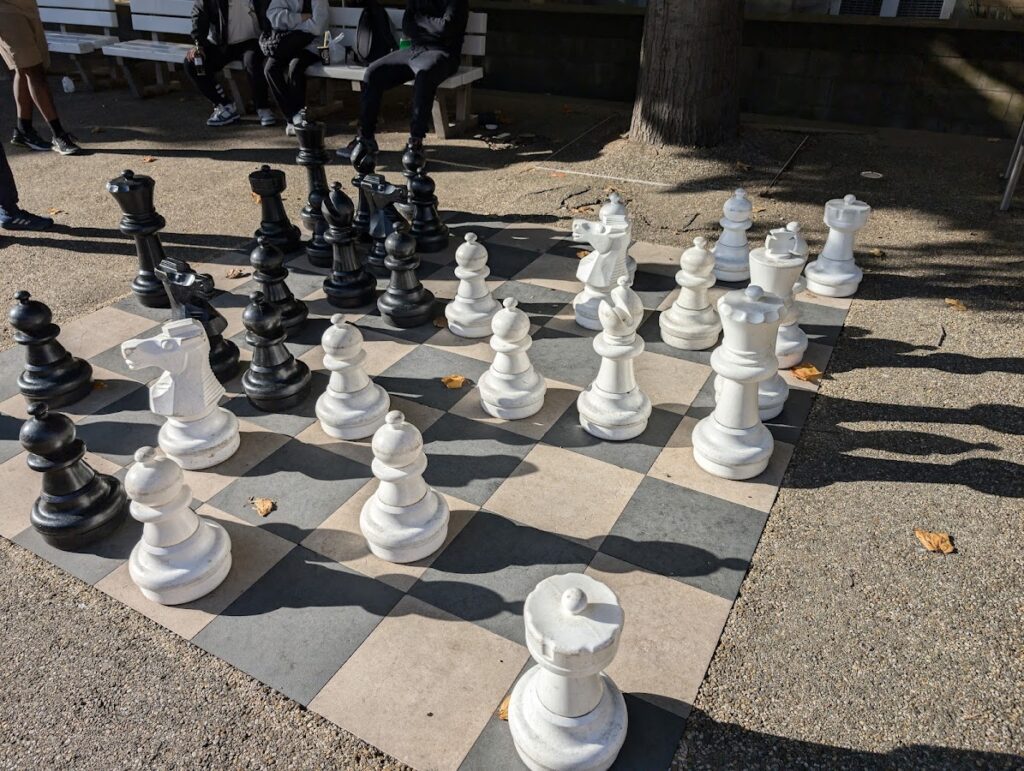
I also went to the art gallery in Leeds which is filled with incredible pieces of work but the thing that caught my eye the most wasn’t actually inside the building

It was the giant chess set outside. Now to me this large game of chess represents what macro is to me, taking things that are usually so small and possibly inconsequential and very easy to overlook and making them bigger than they actually are, showing people all the small intricate details that maybe only the creator of said piece can see.

To me photography is less about just capturing what’s in front of you but what you see in front of you, being able to show other people the way you see our world, the colours others may not see. The shapes others may not see and the beauty that people can overlook or not notice. Taking those small yet incredible things we see every day and sharing them with everyone and to me macro photography does just that.

Categories
Data Protection News

Key Components of a Data Security Strategy

data security strategy

So, let’s explore why a comprehensive and actionable cyber security strategy is not just beneficial, but absolutely essential. An effective cybersecurity strategy is fundamental for organizations to defend against today’s sophisticated digital threats. Cyber threats evolve quickly, so your security strategy must be continuously updated to address new risks. Ensure that your organization is complying with all relevant laws and regulations. This could be reflected in a lower number of security incidents or reduced financial losses from cyberattacks.

In today’s increasingly connected world, every business, regardless of its size or industry, needs a solid information security strategy. Organizations with formal cybersecurity or information security policies typically already have the main elements needed for a data security policy. A variety of technical, legal and organizational activities and challenges are linked to the administration of data security. The ultimate goal of a data security policy is to protect sensitive data by ensuring authorized access, transmission and storage of data, while also meeting compliance requirements with government and industry regulations.

data security strategy

This enables consistent, coordinated responses, significantly boosts operational efficiency, and helps build an agile, responsive security posture orchestrated by a central AI automation engine. To operationalize your strategy, select essential security technologies (such as EDR and SIEM) and ensure they integrate into a cohesive architecture. As you map these processes, particularly for repetitive or complex operational tasks like incident response or alert triage, leveraging an AI automation platform like Swimlane Turbine can be a strategic enabler. Outline the necessary security processes and procedures (e.g., incident response, vulnerability management). These objectives should directly address the most critical risks and identified gaps. Selecting appropriate cybersecurity frameworks can provide a structured approach to defining your goals and measuring maturity.

Why is a data protection strategy important to enterprises?

Encryption is a critical step to protect data both in transit and at rest. Implement role-based access controls (RBAC) to restrict access to only those who need it. You need to determine which data assets are the most valuable to your business. Once you’ve defined your objectives, the next step is to create a data protection plan. This involves embedding security into all processes and ensuring ongoing compliance with regulations and industry standards.

Incident response planning

data security strategy

Then strengthen that foundation through continuous monitoring, staff training, and regular updates. This includes integrating data minimization, consent management, and retention policies into system design. Forward-thinking organizations are implementing quantum-resistant cryptographic algorithms. Predictive analytics help teams stay ahead by identifying attack patterns before they fully form.

data security strategy

The ultimate aim is an actionable, resilient defense that can be efficiently managed and scaled. Critically, this strategy must be effectively operationalized; AI automation platforms like Swimlane Turbine help achieve this by streamlining complex security processes, integrating your existing tools, and enabling faster, more consistent actions. A cybersecurity strategy is non-negotiable for effective defense against today’s threats. Swimlane Turbine, the leading AI automation platform, empowers your security team to operationalize complex processes, integrate disparate tools, and respond to threats with unmatched speed and consistency. A well-defined cybersecurity strategy is crucial, but its true power is unleashed through effective execution. If you’ve incorporated an AI automation platform, this is where you would build, test, and deploy your automated security playbooks.

  • Therefore, a cybersecurity strategy is just as essential to the large enterprise as the SMB.
  • A cybersecurity strategy is a plan that involves selecting and implementing best practices to protect a business from internal and external threats.
  • A comprehensive data security strategy requires continuous maintenance and effective measurement to ensure ongoing protection against evolving threats.
  • It’s not enough to put a data security strategy in place and let it run its course.
  • A strong data security strategy will lay out your crisis plan, as well as what you’ll need to be doing daily to prevent data being leaked or breached.
  • Educating them effectively about data loss prevention will help you produce a human firewall that can fend off any attacks and alert the relevant security heads if they spot something suspicious.

Companies continue to create more attack surfaces with hybrid models, scattering critical data across cloud, third-party and on-premises locations, while threat actors constantly devise new and creative ways to exploit vulnerabilities. It outlines the approach to managing cyber risks across the entire enterprise, aligning security efforts with business objectives, and addressing diverse regulatory and operational requirements. An enterprise cybersecurity strategy is a comprehensive, high-level plan tailored to the specific needs, scale, and complexity of a large organization.

What is a data strategy?

Create an incident response plan before you need it, defining roles and containment steps. Organizations that follow these steps can build security programs that https://indiana-daily.com/smart-contract-security-audit-services-from-cqr-main-advantages.html grow with their needs. Too much focus on confidentiality can compromise availability, while prioritizing availability without access controls can weaken confidentiality.

Value delivery focuses on ensuring that the investment in security delivers tangible benefits to the organization. This is crucial because security should enhance business performance, not hinder it. Strategic alignment ensures that your security strategy is in line with your organization’s overall business goals. It's more than just a set of tools or policies; it’s the blueprint that ensures the protection of your enterprise against ever-evolving cyber threats. We'll explore strategic alignment, risk management, and the key metrics for measuring success.

Discover why https://sellrentcars.com/news/climbing-search-rankings-seo-technical-maintenance-done-right.html our graduates lead the way in data science, AI, and information systems This means protecting its confidentiality, integrity, and availability while meeting legal requirements and supporting daily operations. Frameworks like NIST and ISO can guide these improvements as new threats emerge.

Categories
Uncategorised

Hello

Categories
Uncategorised

Unit 3 – Future project

Final Major project.

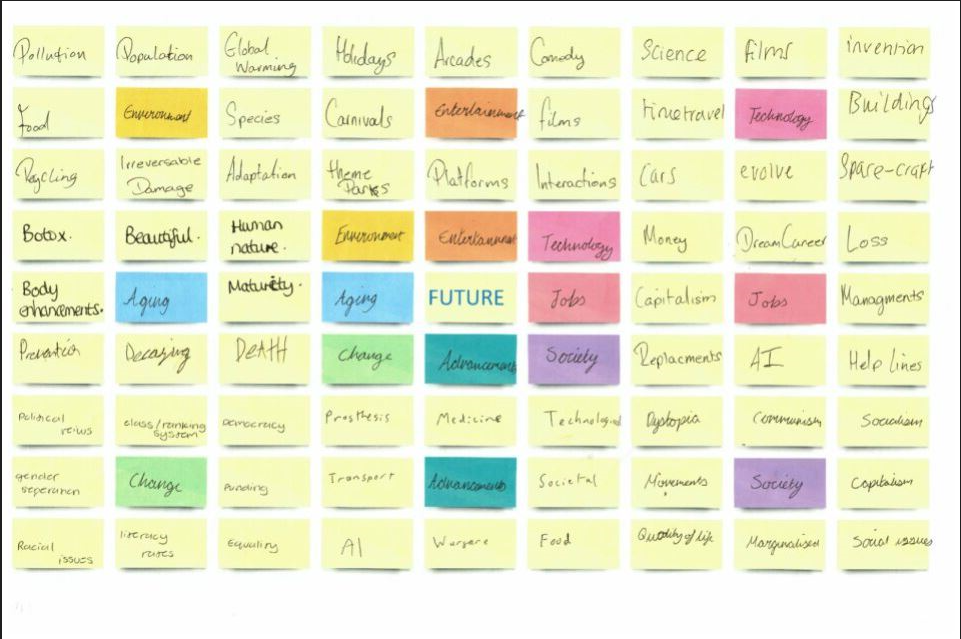
Our Final Major project, or FMP as I’ll be referring to it, is all about the future. After some brainstorming I want to focus on the future of media, specifically the evolution of movie and television from the days of practical effects and monochrome to the modern day of CGI and technicolour and how that technology could continue to progress.

One specific method I want to use is an unused one from a previous project, that being light painting. I myself own a pair of LED pois, a sort of soft plastic balls with colour changing LEDs inside attached to a string to be spun around. I imagine with the colour changing capabilities of them and the patterns that could be made would result in something at least pretty.

So I need to find photographers that work with black and white to colour as well as light painting.

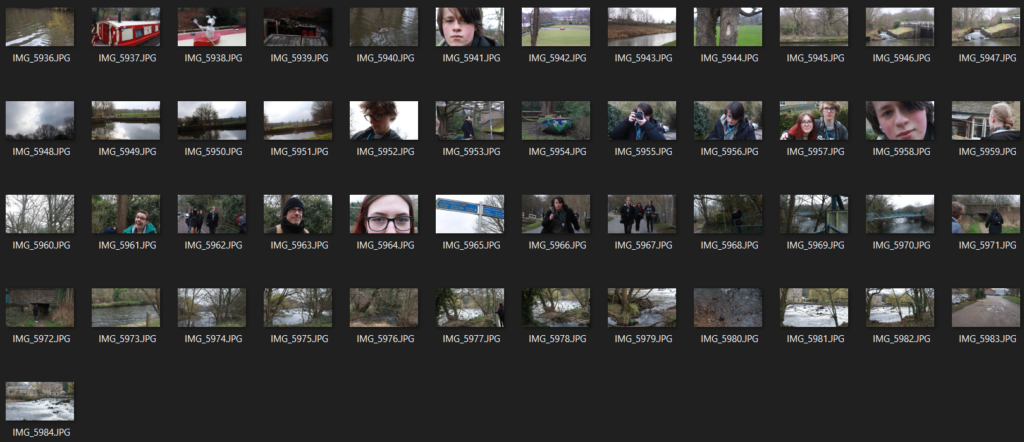
This is a photoshoot from the saltire trip

Research

One photographer I’ve found is Jan Leonardo who works with light painting, one of the things I’m wanting to use in my project. His use of colour and shape is amazing, with work ranging from abstract to nature, people and even working with brands, but the light painting stays constant and amazing throughout his work.

here you can see his work, I especially like the abstract work and some of the work with people.

The second photographer I want to talk about is a man called Eric Staller, another light photographer but different than Jan Leonardo since Eric mostly uses fire instead of using LEDs and also only did light painting in his early work in the 1970s. But I absolutely love the shapes he makes using the fire.

New plan

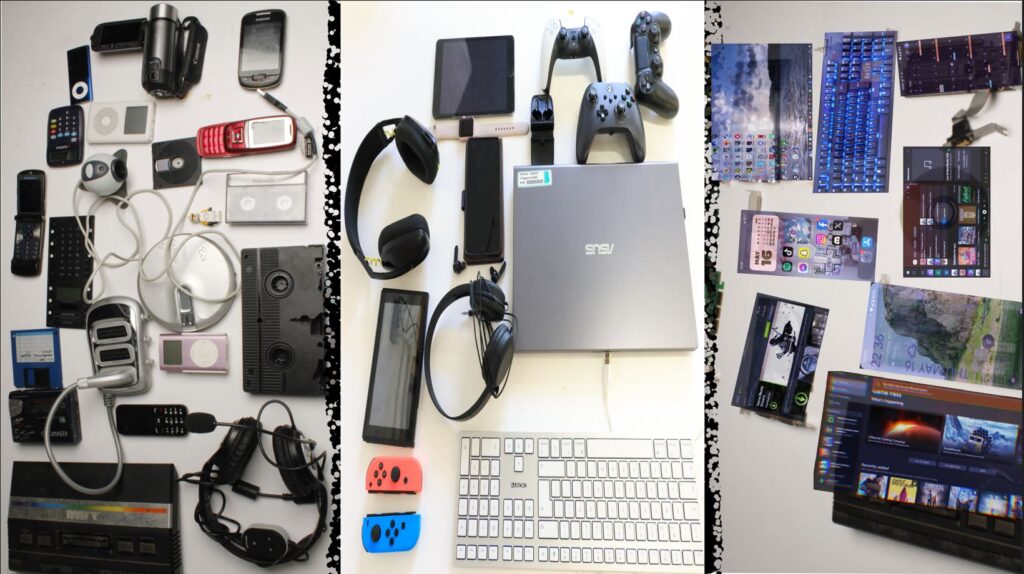
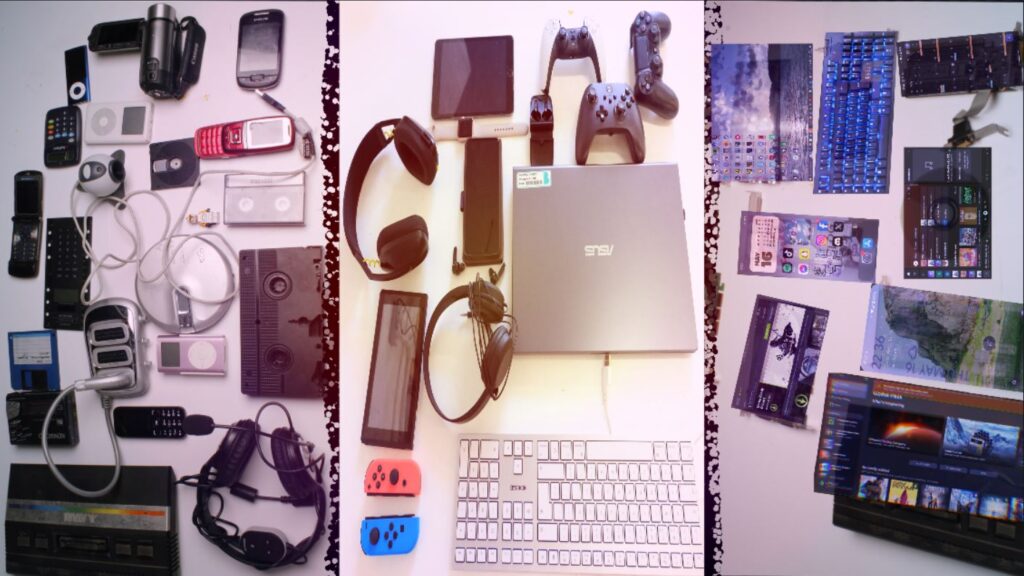
So I’ve fallen into the same trap I usually do which is getting overambitious with my ideas, having to not only organise the people I’ll need for the shoot but also for making the look of film sets from the different eras it’s too much for me to do especially with the time remaining, so I’m keeping the same theming of past-future but with technology. It’s also more in land with the brand of ACCU with components and electronics. I’m still keeping the light painting component to act as a “time vortex” so it’s like a look through the tech of the past on the left, modern in the centre and what possible future technology over on the right.

In preparation for my new plan I’ve had to research on the style I’m wanting to do and I’ve found the perfect photographer by the name of Jim Gordons. Jim does a lot of different photography but the specific genre I’m looking for is his collection work. Jim gathers mass amounts of item ranging from technology to locks to even food products in some instances, aligning them all to fit together and even though its just items on a background it still has a way to be captivating and interesting.

https://jimgoldenstudio.com

This is the website I found jims work on

So above is a very rough concept of what I want it to look like, the blue swirl represents the light paint, the left highlight represents old tech, purple represents modern and green represents future tech, now you can see they overlap and that is on purpose, and that’s because I want to incorporate the Hockney joiners technique from my previous project, but only on the edges of sections. The entire shoot will be studio based.

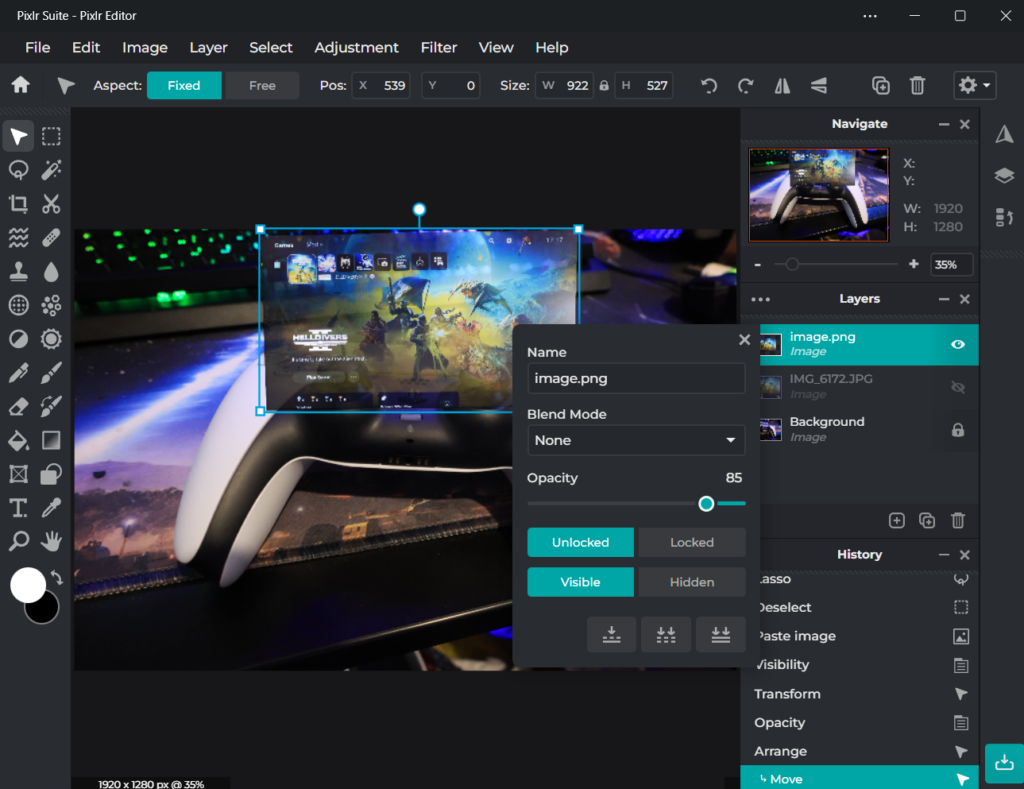
Above are mockup concepts of what I’ll be using to represent future technology, using broken circuit boards and screen shots of phone and desktop displays and other such applications to use as the screens. I’ll be reducing the opacity of the screenshots to 85% and using a light blue almost teal colour at 50% opacity as when you think hologram you typically think of blue but I dont want it too dark so you can still see and make sense of whats on there.

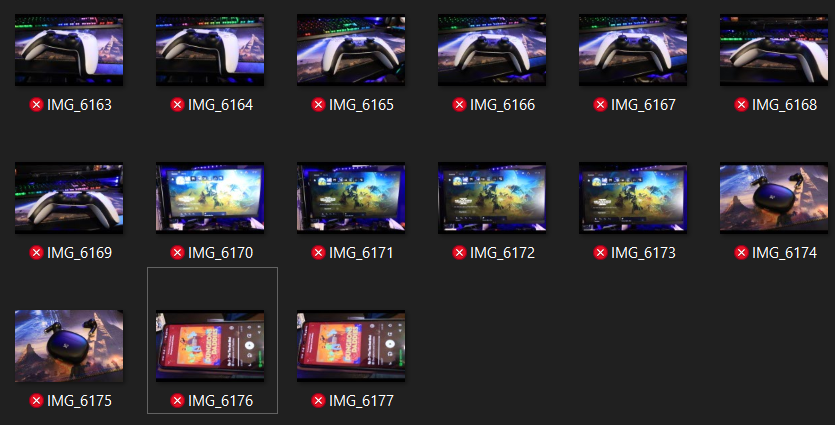
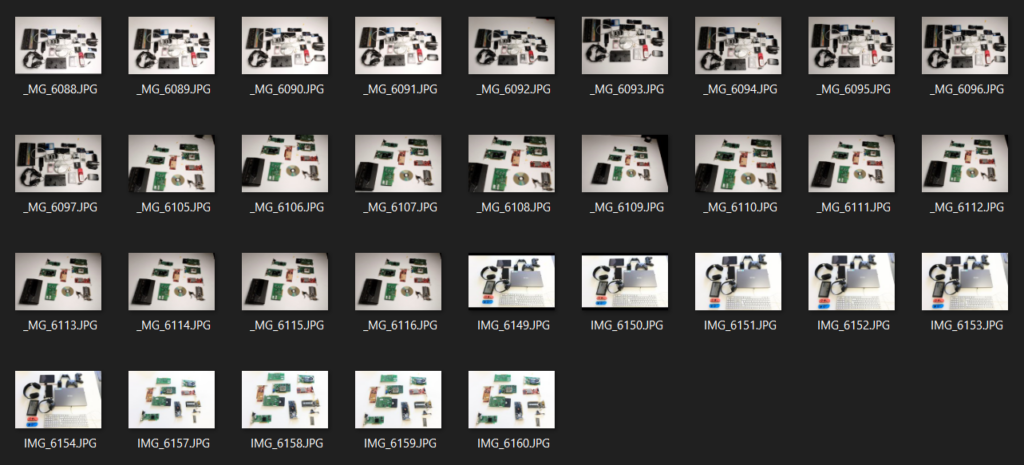
Above is a contact sheet for some testing photos for some of the tech I’m wanting to use, to try and test the practical applying of the hologram styling on actual photos.

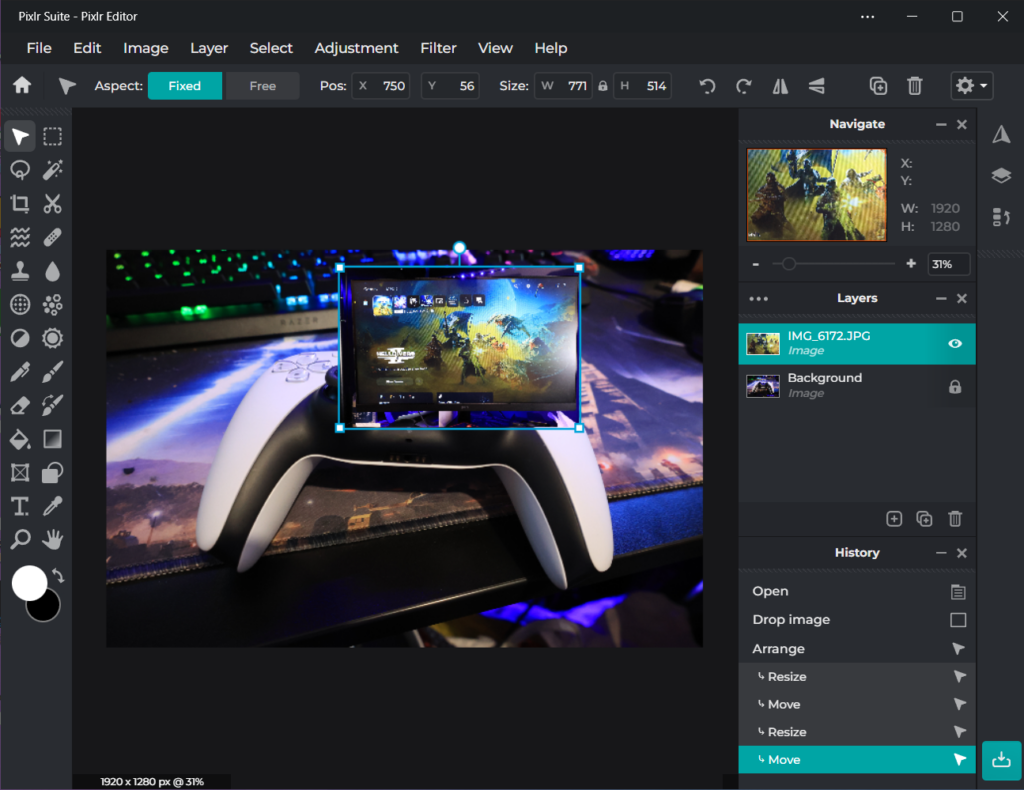
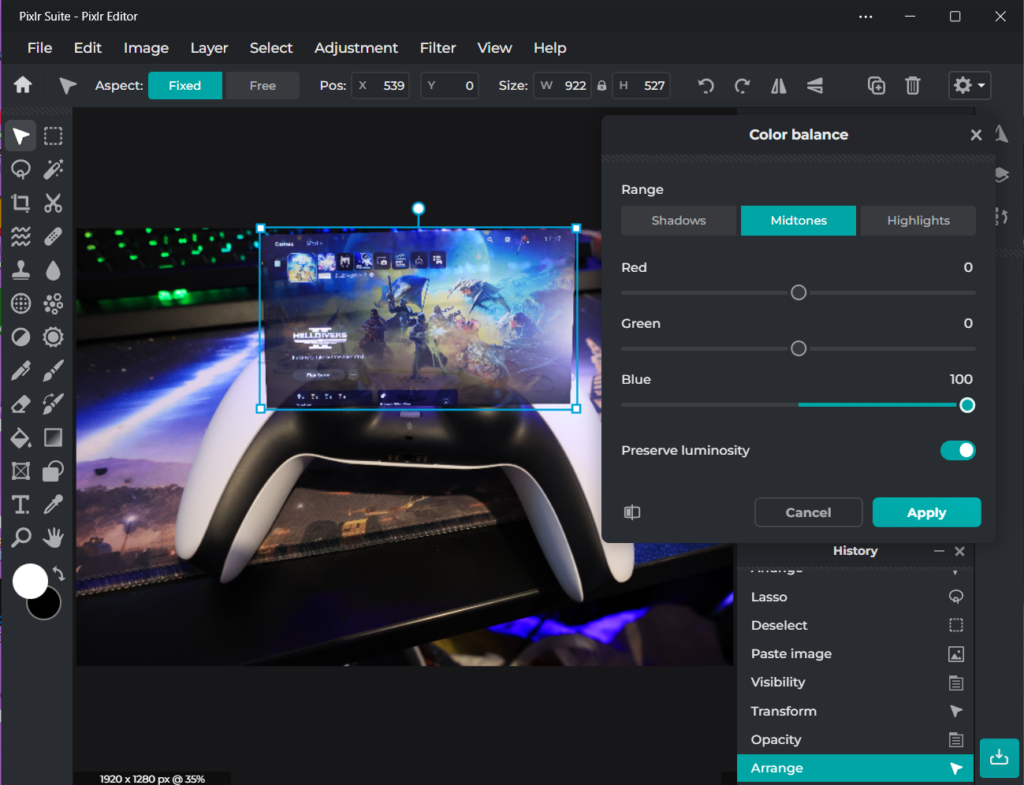
Here I took one of the photos of my ps5 controller that I felt had the best angle for for a “holographic screen” I then layered an image of my PS5 home screen from my monitor over the controller to then begin editing it t0 look like a holographic screen.

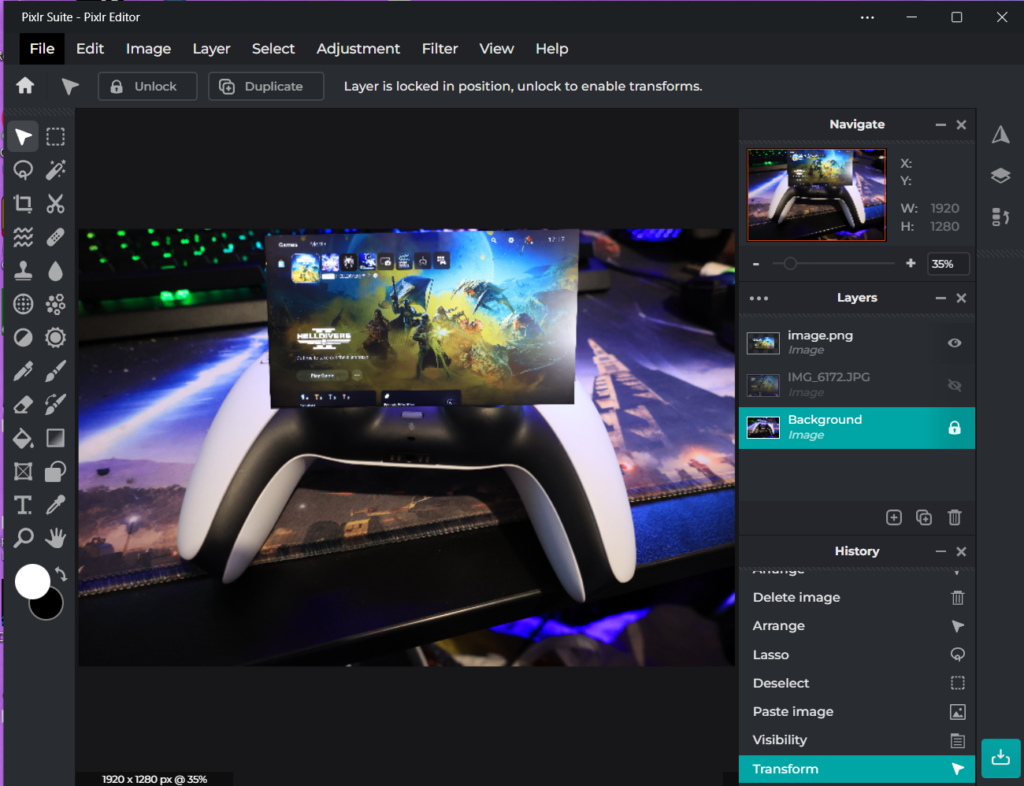
I cut out just the screen display to remove the monitor and surroundings.

I then lowered the opacity of the screen layer to resemble the look of the typical sci-fi hologram where it’s slightly transparent.

I finally changed the colour balance to be more blue, as it’s a more cohesive process than completely painting over it in blue and it gives a more clear image final result.

Featured above is the contact sheet for my photoshoot

Evaluation

Now at the end of my project it’s time to reflect on the entire process. To go back to the beginning with the planning and research process, I know that my planning process is a little all over the place. My research informed parts of the project ,that unfortunately never made it to the end, that were more different methods but not the main focus of the photo. Instead I researched the light painting portion of my original plan, seeing the methods of shooting with poi lighting as that was the equipment I had to hand. I ended the research and planning phase with a way to make something interesting with the future concept, the way things were filmed from past, present and what the future could hold, I was wanting to experiment with distortion and uncanny looks to replicate the AI that has become popular in the industry. However I hit a road block that I’ve encountered before that being overambitious with my ideas and not knowing how to properly make those ideas a reality, in this instance I didn’t know how to make locations that would look like film sets. I brainstormed new ideas and remembered one of the core points of the original brief being the company Accu who we were making the pieces for. Accu being a company involved in technology I thought what might I have at my disposal both in and out of college. I came to the conclusion that focusing on tech of the past present and then concepts for the future would result in an interesting end product as well as thematically fitting for our clients. There was then another issue presented in that I didn’t know how to present the items, so I got to researching to formulate more concrete ideas and managed to find Jim Golden who’s collection pieces where exactly what I was looking for. During this project I’ve really improved upon all my skills, I’ve become a lot better with planning but also subsequently with changing original plans to make my projects more realistic to do rather than committing to an impossible idea. I’ve become better with researching, both online and with experimenting with what I want to do practically. My skills with studio work has become a lot better as with previous projects I didn’t really take advantage of the studio and subsequently wasn’t too familiar with it as my peers, however I feel confident with studio work now. If I were to do this project again I’d try and focus on the clients more from the beginning as they are the main focus, ad well as experimenting with editing more than just with for main segments of the piece, for example being more familiar with the tools and what effects they can produce to make my images more visually appealing. 

Categories
AI News

Governing ML models with auditable training data

auditable AI data workflows

LakeFS records every change as an immutable commit, so each training run or agent action can be tied to the exact data state it read. Without versioning, training runs can’t be reproduced, regressions can’t be traced to the data change behind them, and there’s no known-good state to roll back to. AI results depend on the data present when a job runs, and enterprise data changes constantly through backfills, corrections, and new ingestion. If a merged change is wrong, an atomic rollback restores the previous state in seconds. If a merged change proves wrong later, reverting to the previous commit is one operation.

A single layer that records data state and controls change addresses all six. Every change records who made it, or which agent did, plus when and why, DataGPT Brings Reviewable Workflows to Conversational Analytics and every training run Chatbot can be tied to a specific version. New raw data lands somewhere isolated, automated checks run against it (schema, null rates, row counts, label distribution, leakage across splits), and it’s published only if they pass. Once data changes underneath a model or agent, a stack that only tracks the current state can’t explain the results.

auditable AI data workflows

Lockheed Martin built an “AI factory” https://aicurated.com/ where teams share large sensitive datasets in a secure air-gapped environment, with reproducible experiments, access control, and complete lineage tracking. Industries adopt AI data platforms for the same core capabilities but for different reasons. Data preparation and training should read through a layer that caches by immutable version. Built into the workflow, every change is a commit with an author and a message.

auditable AI data workflows

1.4 Integration and interoperability

auditable AI data workflows

This evolution from purely technical evaluation to holistic assessment represents a maturation of the field—a recognition that AI systems exist within social contexts and must be evaluated accordingly. In the United States, various agencies have developed their own approaches, from the FDA’s guidance on AI in medical devices to the FTC’s focus on unfair or deceptive AI practices. Auditability wasn’t a big concern because the systems themselves were Generative artificial intelligence fairly transparent to those who built them. In essence, AI auditability is about creating systems that don’t just ask for our trust—they earn it through verifiable evidence and ongoing scrutiny. The level of auditability should match the potential impact and risk of the system.

  • According to A-LIGN’s 2025 Compliance Benchmark survey of over 1,000 professionals, 76% of organizations plan to pursue AI-specific certification within 24 months.
  • For example, OpenEvidence is an AI system that answers doctors’ questions by drawing on “trusted sources” in evidence-based medicine (Hurt et al., 2025).
  • Forbes Finance Council is an invitation-only organization for executives in successful accounting, financial planning and wealth management firms.
  • In a recent evaluation, it returned clear, relevant recommendations (with citations) for primary care cases, reinforcing physician decisions (Hurt et al., 2025).
  • This design allows clinicians to both verify recommendations in real time and review them retrospectively, providing transparency and accountability.
  • Rather than applying fixed rules, LLMs engage in probabilistic reasoning over high-dimensional representations.
  • Several systems already incorporate retrieval mechanisms or citation displays alongside generated answers.

The Context Window Payload

  • Building it in from the start is far easier than trying to retrofit it later, and the benefits extend beyond compliance to include better system performance, reduced risks, and increased trust from users and stakeholders.
  • The technical complexity of modern AI systems, resource constraints, expertise gaps, and competing interests all make implementing robust auditability difficult in practice.
  • While perfect auditability remains an aspirational goal, these trends suggest we’re moving in the right direction—toward AI systems that don’t just ask for our trust but earn it through verifiable evidence and ongoing scrutiny.
  • For the rest of us—the people affected by AI decisions in our daily lives—auditability provides a crucial safeguard.
  • Looking ahead, the trends toward continuous auditing, specialized tools, standardization, collaborative approaches, and integrated governance all point toward a future where AI auditability becomes more effective and more accessible.

Two runs of the same agent on the same task can take different steps and write different results, so the controls built for predictable pipelines don’t stretch to cover them. AI agents change data platforms by turning AI from a reader of data into a writer of it. GxP (good Transformer (deep learning architecture) practice) data integrity rules, including the FDA’s 21 CFR Part 11 requirements for time-stamped audit trails on electronic records.

Categories
Cloud News

Top 10 Best Cloud Management Services – Ranked for 2026

cloud management services

CMPs support FinOps by providing cost https://www.child-clothes.info/the-beginners-guide-to-getting-started-101-6/ visibility, allocation, forecasting, and anomaly detection. CMPs focus on what happens after deployment — tracking costs, optimizing resources, enforcing policies, and reporting across environments. A CMP / cloud management platform is software that helps organizations monitor, optimize, and govern their cloud infrastructure from a single interface.

cloud management services

According to our Currents research report, 35% of companies use multiple cloud providers while 31% run hybrid models, showing how common these complex setups have become. Capgemini’s recurring operational governance and structured coordination supports standardized reporting and bid-cycle inputs, which reduces dependence on manual policy updates across recurring governance cycles. Accenture also ties security transformation into program execution, which helps align access controls with governance outcomes across complex portfolios. Capgemini fits when governance and operations are executed as one program thread, while Cognizant fits when operational transition and runbook-ready workflows must land with rollout. Capgemini ties migration architecture work to governance and managed operations, which supports coordinated delivery across multiple workstreams. Accenture frames readiness work around delivery-grade governance and security across engineering change, then coordinates program-level execution rather than treating readiness as a point-in-time assessment.

cloud management services

The offering emphasizes end-to-end cloud management work across modernization delivery planning and ongoing operations, including reliability workflows for telemetry-to-incident handling. Program-driven cloud management delivery that connects governance, integration architecture, and regulated workflows across departments. Its core offering area centers on cloud operating models, governance guidance, and managed service delivery workflows that support identity and integration needs in regulated environments. Redesigns delivery processes and automates pipelines while establishing shared engineering practices. Cognizant is a fit for cloud management programs where legacy modernization requires coordinated integration, testing, and rollout steps under structured release execution. The best platforms go further — automatically managing discount commitments, rightsizing resources, and eliminating idle waste without manual intervention.

What are cloud management platforms?

Not all cloud management platforms deliver the same capabilities—some excel at detailed performance monitoring but lack cloud cost optimization features, while others might offer great security scanning but minimal cloud automation tools. But the right tooling can handle routine maintenance like scheduled snapshots, log rotation, and certificate renewals while providing programmable webhooks that trigger custom workflows when specific events occur. Managing cloud resources often means manually logging in to check CPU usage, scanning through logs to spot errors, and clicking through dashboards to approve or reject security changes—repetitive tasks that steal time from more important work.

cloud management services

What Are The Benefits Of Cloud Management Platforms?

A notable part of this toolkit is DigitalOcean Monitoring, which tracks metrics for visibility, monitors Droplet performance, and sends alerts if infrastructure issues arise—all with zero configuration required. Some tools monitor your entire cloud infrastructure from networking to cost management, while others focus specifically on Kubernetes orchestration or serverless computing. We’ve handpicked the top cloud management platforms for 2025, including both vendor-specific solutions and third-party options that work across multiple providers. Third-party cloud management platforms solve this by aggregating data across multiple providers, giving you consistent metrics and a cohesive picture of your entire infrastructure. Look for flexible deployment options that fit your specific environment, whether https://emergingequity.org/tag/consumer/ that’s multi-cloud support or hybrid capabilities for on-premises servers.

Engineering Use Cases for CMPs

Unlike traditional CMPs that stop at dashboards, nOps combines visibility, allocation, optimization, and automated Commitment Management in one platform. It provides a suite of tools for defining and implementing business rules and IT policies, in order to orchestrate automated and manual tasks across complex cloud environments. Turbo360, formerly known as Serverless360, is an Azure cloud management platform designed to streamline financial operations (FinOps) and infrastructure monitoring within complex Azure environments. It provides actionable recommendations, budget controls, and cost policies to help your organization avoid surprises and reduce unnecessary cloud spend. It helps executives correlate cloud https://konasaranews.com/news/what-to-do-with-old-mobile-phones/ spending to business value and helps Finance teams accurately track and forecast cloud spend for more robust budgeting.

A hybrid cloud management platform is a tool that gives you unified control over both your on-premises infrastructure and public cloud resources through a single interface. Palette’s intuitive interface and automated workflows make it ideal for DevOps teams managing containerized applications in hybrid or multi-cloud environments. It collects detailed cost data from various cloud providers, identifies spending anomalies and optimization opportunities, and automates cost-saving actions like rightsizing instances or scheduling shutdowns. By assimilating, aggregating, and normalizing data on spend, cost, consumption, performance, and attributes from diverse systems, including cloud vendors, Apptio offers a comprehensive and unified understanding of technology expenditure.

  • Terraform allows users to build, change, and version cloud infrastructure safely and efficiently, through automated provisioning and resource management.
  • This means setting measurable business indicators and aligning them to organizational cloud strategies to optimize workflows, infrastructure management, and policy compliance.
  • Instead of treating cloud infrastructure and business operations as separate entities, organizations should apply cloud management to empower business efficiency.
  • Built for IT and FinOps teams, it uses a zero-code approach and over 600 prebuilt automations to streamline complex workflows, improve visibility, and reduce operational overhead.
  • Cloud Management Platforms (CMPs) provide a range of integrated functionalities that bridge the gap between leadership, engineering and finance, enabling collaborative cloud resource management and optimization.
  • The remaining providers cover specific hybrid and operations coverage needs, but these three align best with the highest concentration of program execution support.

Flexera One pros

Beyond just visibility, these platforms can enable unified governance policies, cross-cloud automation workflows, and consolidated cost reporting—letting you manage resources based on their business purpose rather than which cloud they happen to live on. Many integrate directly with your existing workflows—sending critical alerts to Slack channels, creating tickets in Jira, or even triggering automated remediation scripts when they detect issues like open security groups or unusual API calls. Cloud management platforms are specialized tools that help IT teams monitor, optimize, and control their cloud resources across different providers and environments. Cloud management platforms can help your company regain control, visibility, and efficiency across your entire cloud footprint.

Categories
Uncategorised

Journey< long before time had a name

Research

The first photographer I’m researching is called Mitchel Wu. Based in Los Angeles he works with toys and figures in miniature photography to create scenes and stories. He aims to bring emotion where non is present and give an “unparalleled experience” for his clients. He’s done work for Disney, Hasbro, Mattel, Crunchyroll, Warner Bros and several other companies. He’s also a public speaker. He seems to create his own sets to make the toys seem bigger than they actually are.

From https://www.mitchelwutoyphotography.com/gallery

Re-worked research

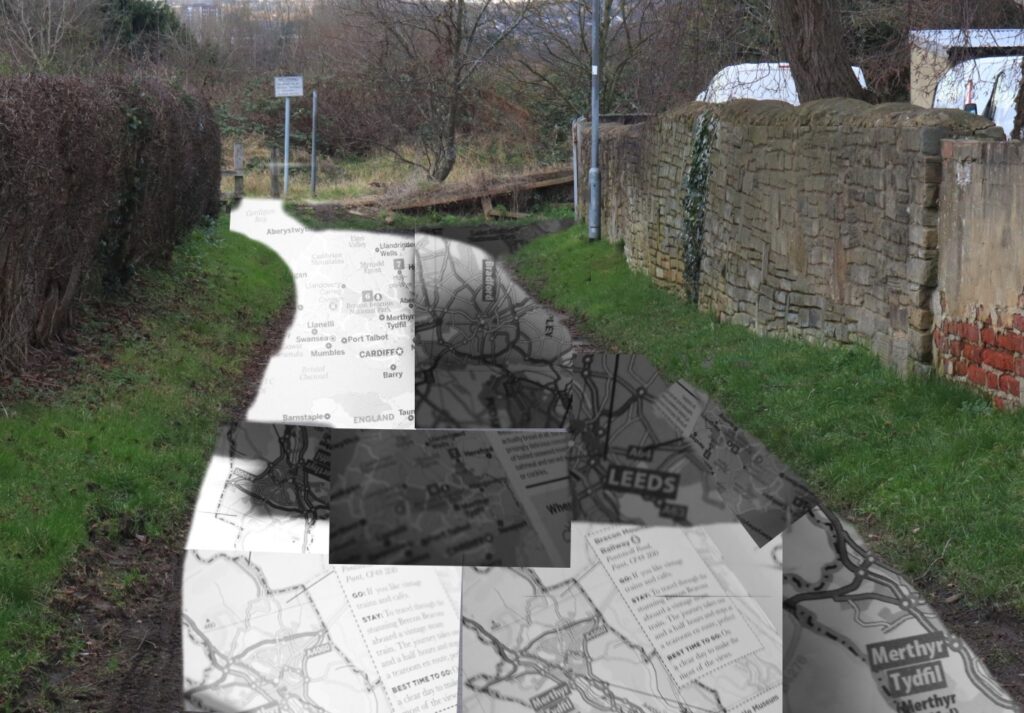
after reworking my idea I have found a new photographer to research, his name is sohei-nishino, a photographer that creates dioramas of different images, typically creating maps of locations creating a sort of birds eye view of a location. Now I’m wanting to do a similar thing of layering the different images I have to create a shape.

Image from https://soheinishino.net

Preparing for photoshoots.

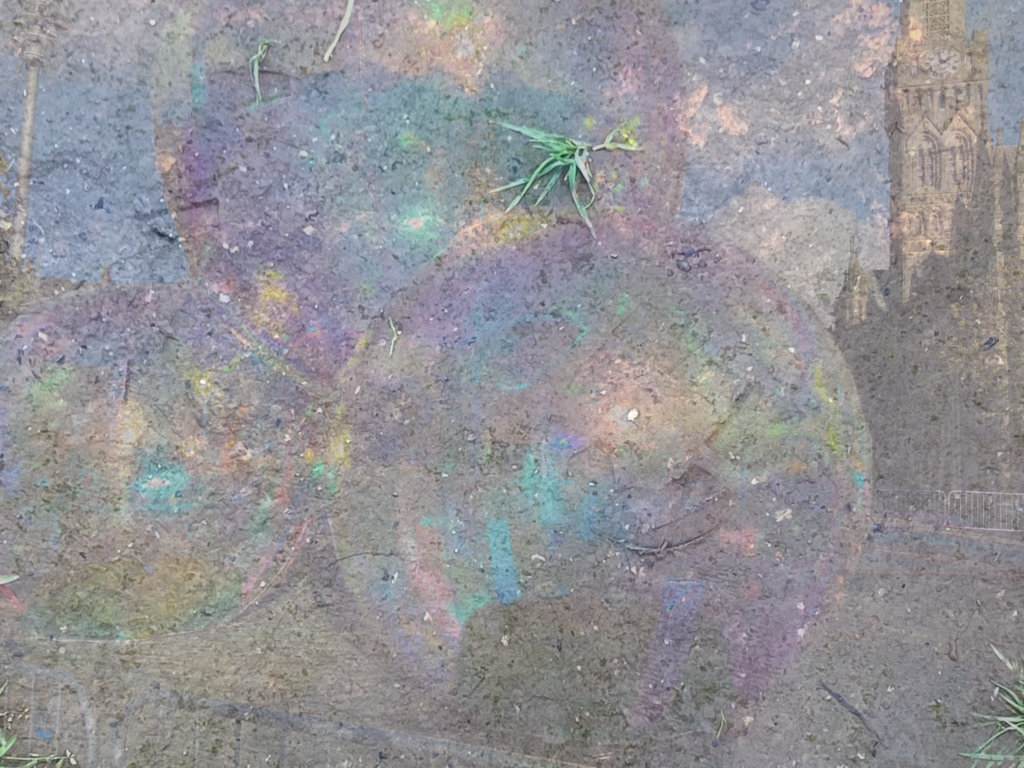
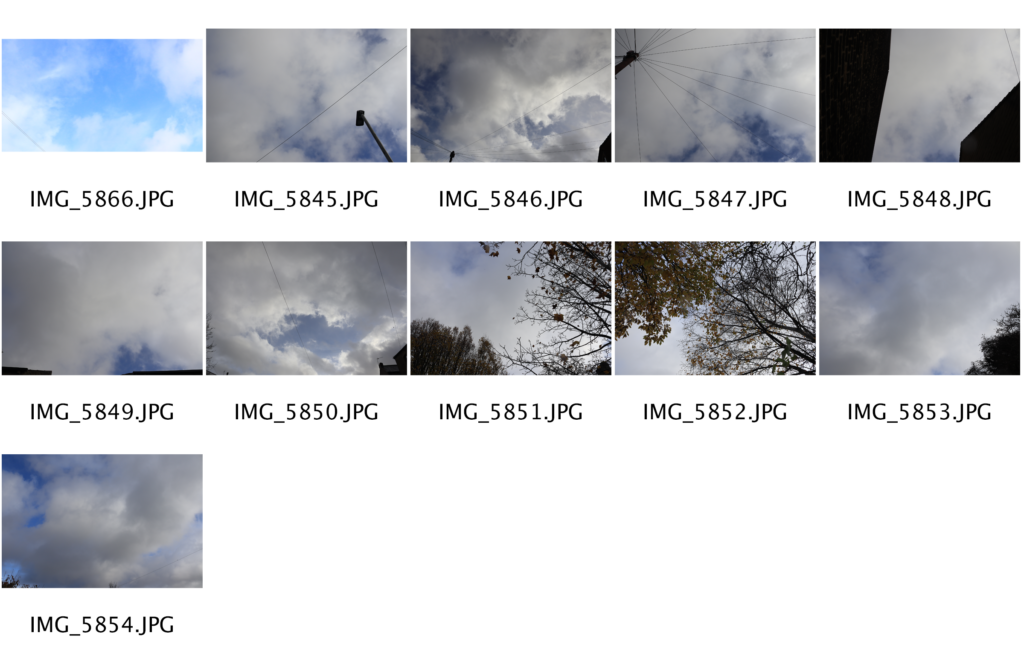
These photoshoots were for textures I was going to use to overlay as practice for my final shoot however unfortunately I never did.

Hockney joiner.

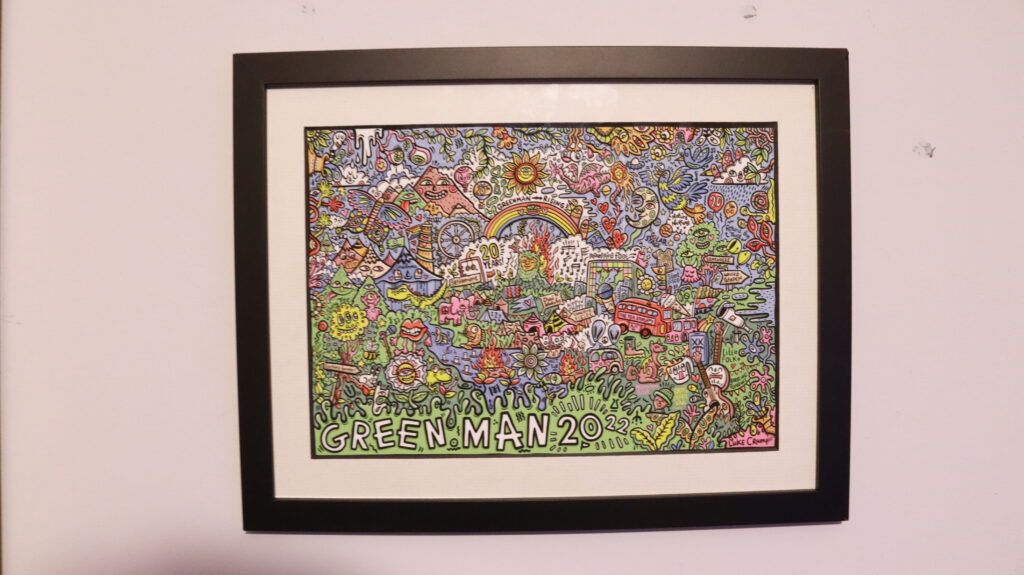
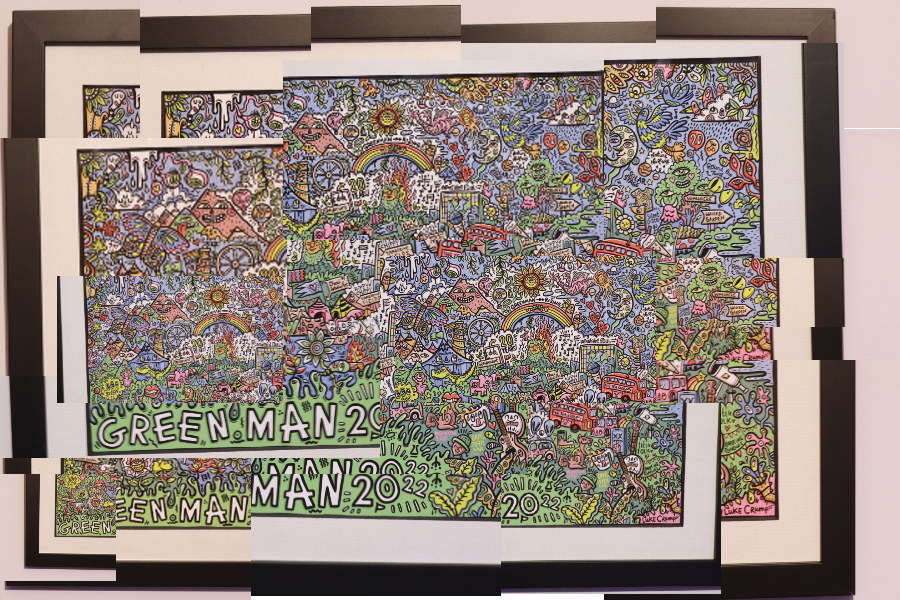
For my Hockney joiner piece I will be using a painting at my home, I think that the design can result in a very interesting final result.

This image is my focus, the intricate designs being overlapped seems like an interesting concept, I’m hoping my vision can become a reality

Honestly I am really happy with how this turned out, it still has the look and outline of the original but still has that jumbled and distorted look of the Hockney joiner genre of image.

Locations of interest

Glanmsuk

Ilkley-Cow and calf

henham park

lulworth castle(?)

To make the shoot easier on my part and honestly look better I will be using an atlas and taking photos of the locations with an item of significance with the location

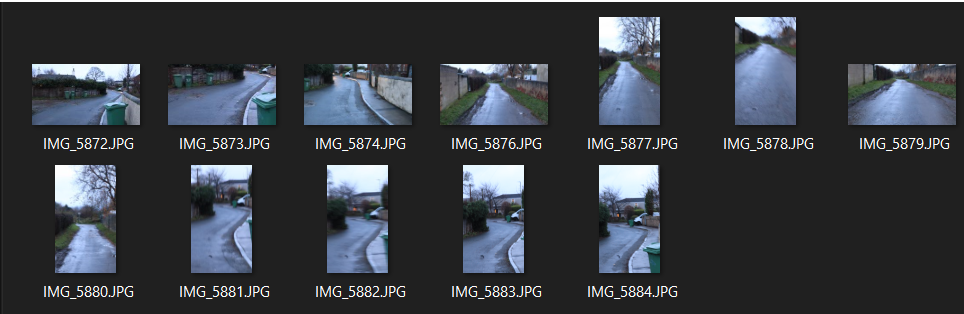
Above is a failed photoshoot, I got the proper location however I unfortunately did not use a tri-pod so the images ended up blurry and unusable.

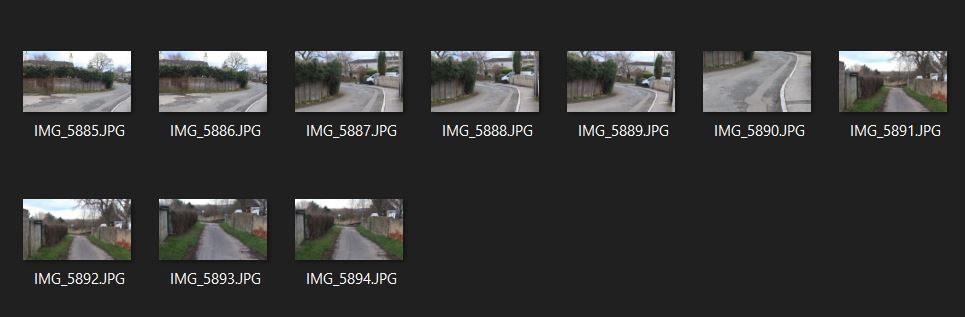
Above is the successful photoshoot, I corrected my mistake and actually used the tripod as I should’ve causing the end result to be some good quality photos I can use

Above is a photoshoot of an atlas that I did. I chose to do it in monochrome to fit with sohe’s work given that is also primarily black and white. my intention with these images is to layer and warp them onto one of the road images from my previous shoot. I would’ve really liked for these photos to come out better however with my camera screen broken I am at a disadvantage

This is my final piece. I’m mostly happy with it, especially the base image but I just wish I had more verity with the map pictures but given my limited recourses and broken camera I’d say I did fairly well. If I were to do this again I’d make sure I was working with a fully operational camera for one, but I’d use a proper macro lens for a better zoom quality as well as using just a map or a bigger atlas, as well as expand outside of the UK.

Categories
Cloud News

Home Cloud Ecosystem

cloud ecosystem

Companies can use a cloud ecosystem to build new business models. In cloud computing, the ecosystem consists of hardware and software as well as cloud customers, cloud engineers, consultants, integrators, and partners. The consumer does not manage or control the underlying cloud infrastructure including network, servers, operating systems, or https://e-beginner.net/what-is-cloud-storage/ storage, but has control over the deployed applications and possibly configuration settings for the application-hosting environment. Cloud platforms can enable organizations and individuals to reduce upfront capital expenditures on physical infrastructure by shifting to an operational expenditure model, where costs scale with usage. This guide explains what a cloud ecosystem is, why it matters, its key components, benefits, challenges, and best practices for organizations looking to optimize their cloud strategy. These customers (the millions of business owners who pay for Salesforce subscriptions) would be the end-users.

In the cloud ecosystem, APIs are what make interoperability possible. These companies operate the massive global data center networks that supply the raw compute, storage, and networking resources most organizations depend on. It is a layered, interdependent environment where hyperscale providers, open-source frameworks, APIs, containers, and automation tools work in concert to support how modern software is built, deployed, and scaled. It is an interconnected operating environment made up of platforms, frameworks, APIs, automation layers, and service models that collectively support how modern software is built, deployed, and scaled. IPaaS allows you to share instances among members, eliminate the overload, and minimize costs while expediting the use speed. The iPaaS creates an instance each time an individual accesses the software.

cloud ecosystem

Software companies can use iPaaS solutions as a way to create connections between applications. Then, the integration automation platform also known as next-generation iPaaS is the best solution to cure past headaches created by integration chaos with a streamlined single integration hub. With iPaaS, businesses can create an aligned, collaborative, and integrated tech ecosystem with clean and reliable data.

Cloud Modernization Services

Especially the company level is currently of great importance as a multitude of companies are announcing plans to build an own platform ecosystem. A business ecosystem represents, in general, a pertinent scope for systemic innovations, where different interrelated and interdependent companies cooperate to deliver customer solutions (Adner 2017; Peltoniemi and Vuori 2004). The Data Distribution Neighborhood provides for data consolidation in (for example) OneLake, and for all manner of “downstream” data distribution such as search, APIs, data warehousing, analytical workloads, and use in AI-driven scenarios. This creates a cycle where community innovation feeds commercial offerings, and commercial investment funds further development. Stripe, the payment platform, built its entire business around a set of APIs that developers can embed into any application.

Cloud Ecosystem – The connection between Cloud Accounting, Payroll Software, and Dropbox Business

  • Throughout the 2010s and early 2020s, hyperscalers continued to use their massive resources to scale data centers and cloud services.
  • Put simply, cloud infrastructure provides virtual representations of physical hardware and rents out those resources to customers.
  • These developers are also tasked with exploring ways Salesforce can leverage AWS’ cloud services to offer even more features or services to its customers.
  • This model is particularly attractive for businesses that want the flexibility of the public cloud alongside the control of a private environment.
  • Salesforce would be the consumer that builds its customer relationship management (CRM) software on the backbone of AWS’ cloud services.

This enables B2B companies to create end-to-end digital ecosystems, breaking silos and enhancing overall performance. APIs (Application Programming Interfaces) allow seamless integration with ERP, CRM, SCM, and custom software platforms. Salesforce, through its Einstein AI engine, allows companies to personalize customer engagement based on real-time insights. In today’s hyper-connected, fast-paced digital economy, innovation is no longer a luxury for B2B companies — it’s a necessity. Surrounding this core are technology companies, consultants, and strategic partners that interact with and build upon the core provider.

cloud ecosystem

How Do I Build Something People Want?

It is not the only myth and the unexpectedly high costs in some areas certainly also lead to companies taking some workloads back in house. As usual it all depends and although lower costs in on-demand models and a move from CapEx to OpEx are certainly often mentioned and very traditional benefits, using the cloud does not necessarily mean that you’re cheaper off. While the first (strategical decision to move towards cloud) is usually tied to an increasing focus on the business, on agility and on innovation, in which IT is asked to play a key role, the second (a cloud strategy in the optimization of various clouds sense) is the really rare part we’ve mentioned. Several CIOs mentioned it as a trigger for public cloud adoption in interviews so it seems that Office 365 has shifted the mentality in some markets where companies have been rather reluctant in that regard and now (public) cloud adoption all of the sudden seems to be at the top of the agenda.

cloud ecosystem

IPaaS mitigates misperception, inconsistencies, and data loss by building a centralized system for all the involved parties in the management. Companies also use disparate https://labverra.com/articles/understanding-google-llc-comprehensive-overview/ tools to run their businesses, iPaaS brings these tools together to increase internal efficiency and improve workflows. The iPaaS solution, therefore, creates a more efficient ecosystem for team dynamics and optimizes the customer’s workflow. IPaaS allows your customers to access all their information in a suitable place.

Semantic aggregation over millions of rows in BigQuery with AI.AGG

  • Companies are investing in unified monitoring tools and building robust frameworks to mitigate these complexities.
  • These ranges are shared across customers; keep the service’s authentication and authorization controls in place.
  • On the side of the cloud provider, despite the fact that, the cloud ends up on physical machines stored in data centers, it is much bigger than this since they provide the users with physical machines, high speed networking equipment, hypervisor and applications in order to ensure that the business is on the virtual side.
  • Many popular opinions on the origin of AWS go like this, “The original idea for the cloud came from companies renting out spared data center capacity.
  • The constraints of this type of cloud provider, such as computing power, storage and network capacity, can be dynamically scaled up or down according to a changing demand in real-time.
  • Put simply, engineers wanted to be able to integrate software features together via APIs easily.

In conclusion, the cloud ecosystem is rich in terms of its deployment models, which include public, private, hybrid, and multi-clouds, all of which meet the different needs and demands of businesses. This ecosystem enhances the ability of businesses and individuals to lease computational solutions at will, in line with flexibility, innovation and cost sensitivity in the digital frontier. This approach minimizes the round-trip time to a distant data center, enabling real-time analytics and faster response times.

NVIDIA Announces New Planned Investments in Korean Startups at the MSIT-NVIDIA AI Startup Partnership Forum

A cloud ecosystem consists of interconnected hardware, software, clients, developers, and other partners that enable cloud services. Email adoption laid the foundation for the use of a variety of tools, with each one addressing a specific need and serving as a building block of today’s approach to digital collaboration. To keep Google’s data cloud open, we’re committed to partnering with major open data platforms, including companies like Collibra, Databricks, Elastic, Fivetran, MongoDB, Sisu Data, Reltio, Striim, and many others to ensure that help our joint customers can use these products with Google’s data cloud. Giving customers flexibility to work across the data platforms of their choice is critical to prevent data lock-in. This means that Tableau and Microsoft customers can easily analyze trusted data from Looker and simply connect with BigQuery. New market entrants benefit from a better understanding of the cloud ecosystem and potential roles and role clusters they may obtain from the beginning.

The latter, along with on-premises non-cloud, is also still often used for highly sensitive data and platforms, for instance in banking or other industries where companies like to keep their data as close as possible and/or are forced to do so because of regulatory reasons. Yet, as mentioned, some companies are pulling some workloads back from the public cloud to some form of private cloud. The cloud is a popular name for this ‘cloaked’ pool of resources, which can reside in several locations and use various servers and other components, whereby the various services are delivered as one to the customer. Gartner today defines cloud computing as “A style of computing where scalable and elastic IT-related capabilities are providers as a service to customers using Internet technologies”. With cloud computing scalable and flexible IT-related capabilities are provided as a service to external customers using Internet technologies.


Categories
Uncategorised

FMP-Evaluation task 4

Complete Video

FMP

Throughout my project I would document my progress with my project onto my digital space and comparing my progress back to my original proposal. I could’ve been more thorough with my evaluation as my project went on, it would’ve allowed me to have a more thorough project.

With the evaluation I did do while working on my project helped me make some decisions on the final outcome of the video, for example what content remained in the final video like the RWBY section, I saw how the examples from my research worked and upon comparing I felt like that section wouldn’t have fit, as well as looking at my initial target audience. Although I do feel like my evaluation process throughout my project could’ve been more consistant.

Despite having issues with the production process I feel I have met my aims. I have made a video that I feel is both entertaining and inf0rmative, able to give people a different perspective. Also able to replicate the videos that have inspired me but putting my own style and take onto them.
My work in comparison to my research is like an amalgamation of the different parts I researched, taking the specific parts I researched and used the methods and styles I had researched to make my own video.

Based upon my original idea and presentation the end result is different in ways than what was proposed. I feel my original proposal wasn’t as focused as the end result, I focused on actual examples and my idea felt more refined and specific in the final result.

I feel that my video appeals to my target audience, with my target audience being based upon the target audience for my research examples I feel that since I was able to successfully replicate they style of their videos It will appeal to the same target audience.

The skills I’ve learnt over this course I feel are reflected in this project, with my audio recording skills from the podcast task, knowing which microphone to use and how to best record and edit the audio in a similar way to how I edited my podcast. As well as video shooting, getting framing and lighting correct and ensuring there’s no noise on screen. I feel that this project I’ve worked on is a good encapsulation of my skills I had before the course and the skills I was able to learn on the course and I am proud of how it turned out.

I think that if I where to do this again I’d storyboard the video, so that I’d have a loose plan of how the Finalised project would look and to be able to plan if there was anything that needed removing or adding, as well as being able to see if any more clips or images needed adding.

If I were to rate my commitment and engagement for this project I’d say it was at an 8/10. My reasoning is that this project was Important to me, I gave it as much energy and focus as I could but given things out of my control and my own focus levels there where still points where my amount of work and energy being put in wasn’t 100% and there were points in the project where I’d become disinterested.

I feel that I’ve shown a near professional level for my video editing. While there where things that could be improved upon, given the fact I had to learn a new editing software, I was able to produce a good final outcome, overcoming issues with my editing software finding out how it worked and by the end of the project being well on the way to mastering it. The final edit I’ve put out I feel is close to matching some other video essays of the same style that are on YouTube.

I believe that I have been successful in completing the task I set out to do. I feel that I concurred adversaries and issues that were posed to me along the way and was able to produce a comedic style video essay like I set out to do. I’m happy with the script I wrote, I feel it encapsulated the points I wanted to make and the way I wanted to make them. I feel my performance in getting to this final stage could’ve been better and more professional however I do feel that the way I have completed my task has sufficed for the end goal I have accomplished.

I confirm that the attached assessment is all my own work and does not include any work completed by anyone other than myself and sources have been appropriately referenced.

Categories
Uncategorised

Project 4