Photo Essayist- Jason Powell
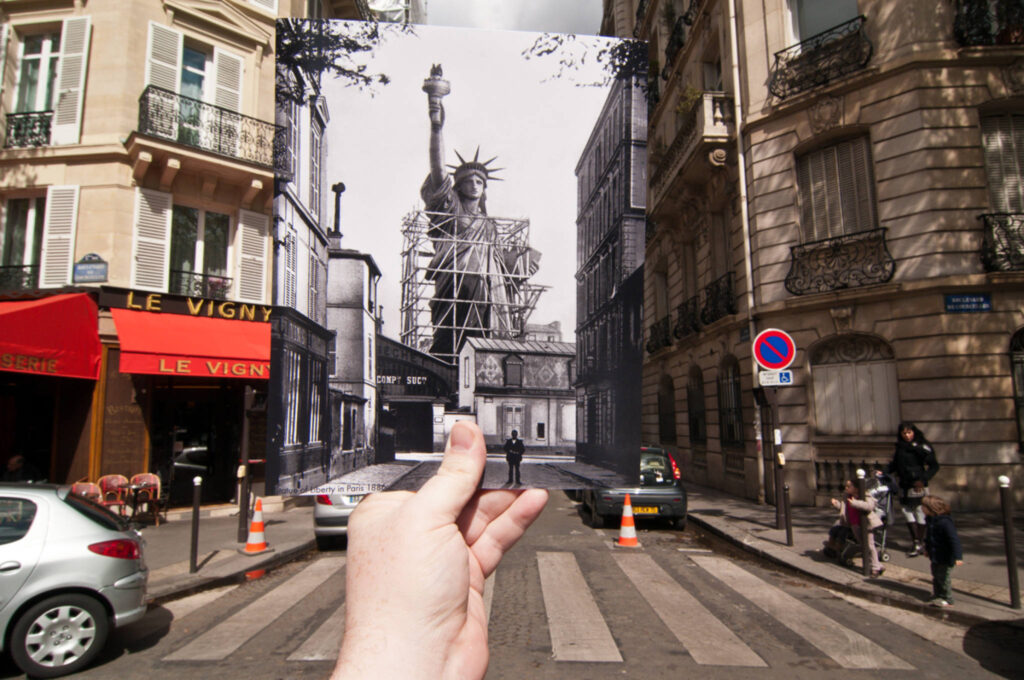
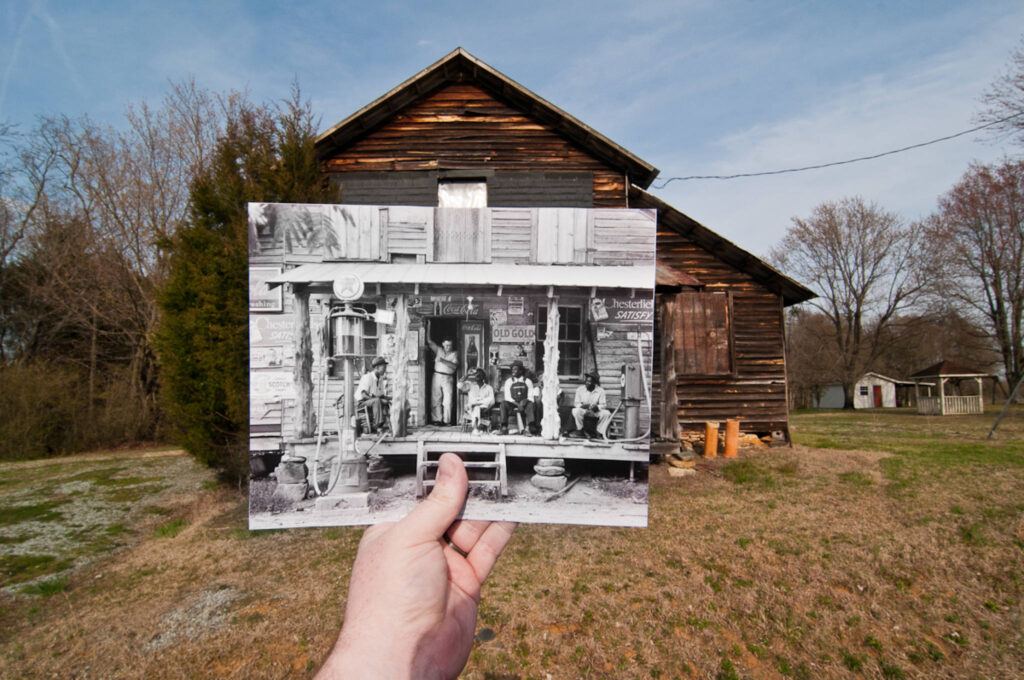
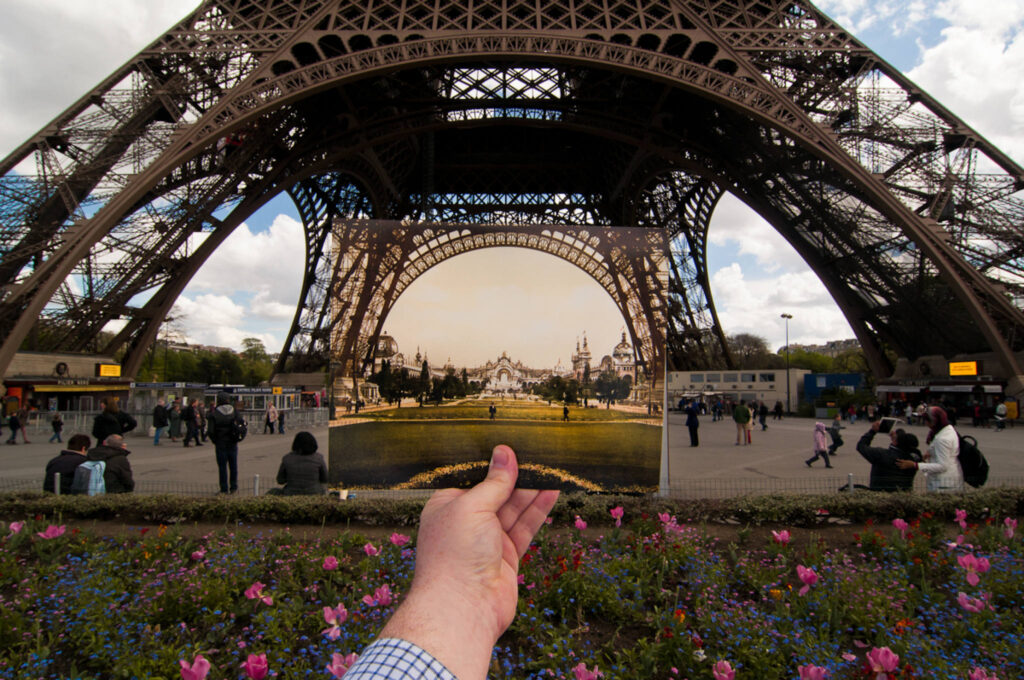
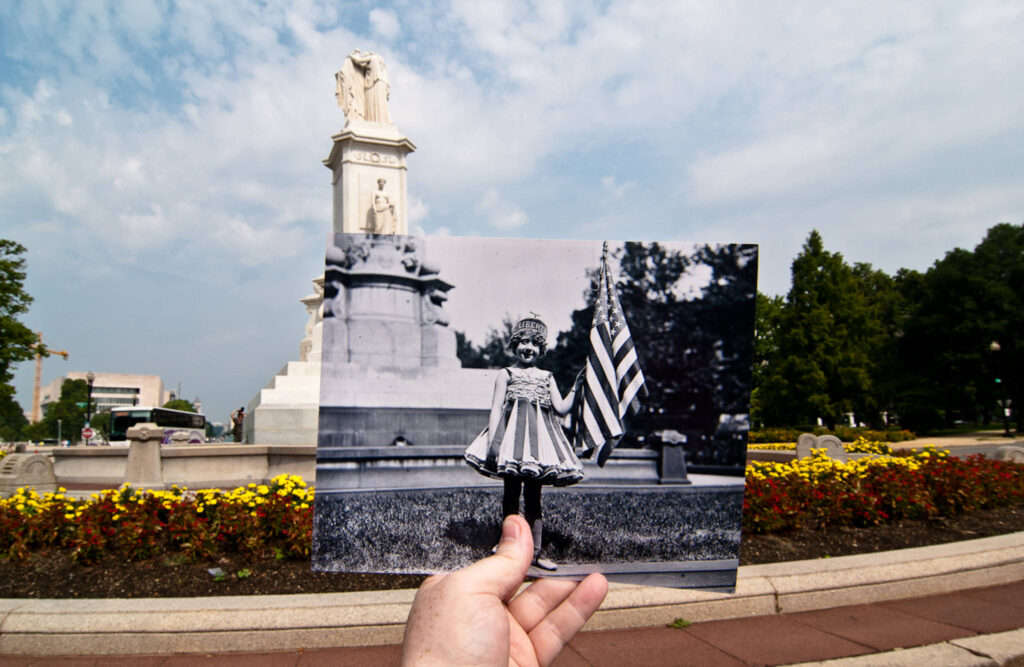
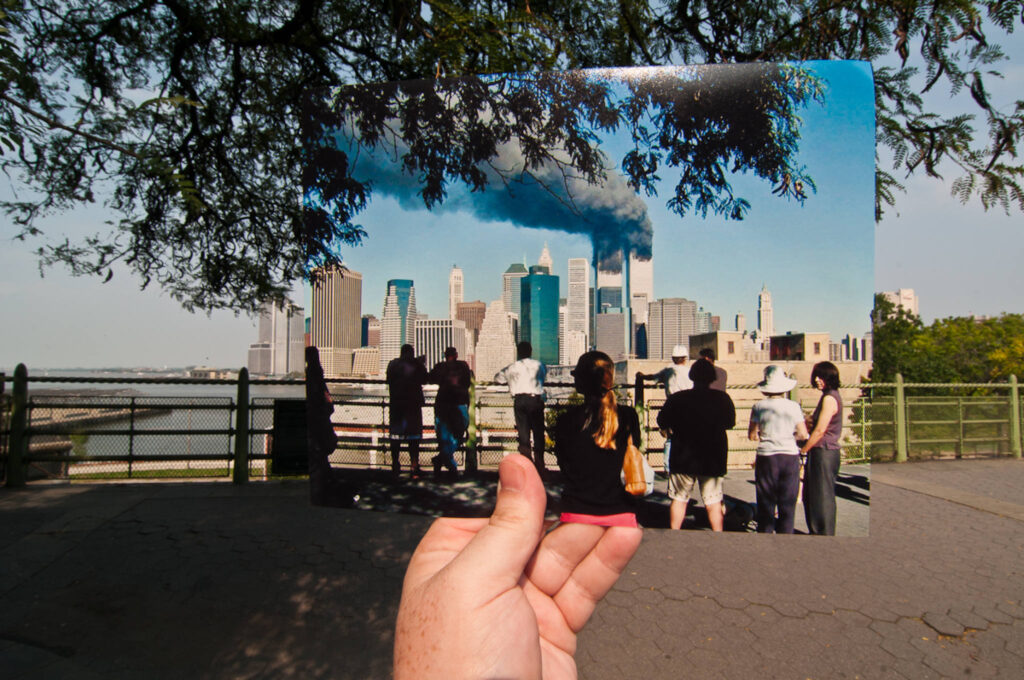
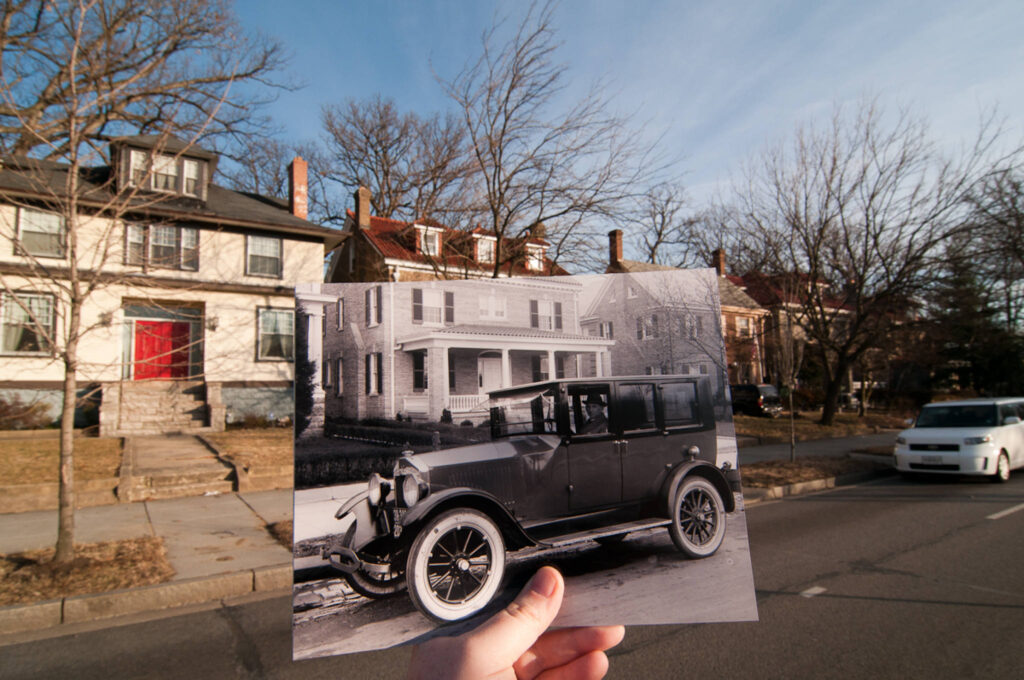
A photo essayist I find inspiring is Jason Powell. Beginning in Spring 2009, he undertook a project he called ‘Looking Into the Past’, where he found old photographs from the Library of Congress archives before printing them out to hold up and picture in the modern-day locations they were originally taken- from the same angles and distances. Powell’s series highlights the changes and developments of both urban and rural landscapes as time progresses, offering viewers a unique perspective on how places evolve. Many of his photos (and the old ones he used) are candid, featuring many average people going about their daily lives, while others capture moments during and the aftermath of historically important events. I chose to research this photographer first as he created composite (my chosen specialist practice) images, which juxtapose past and present, reflecting the idea of memories.
Primary Research Shoot Plan
Out of my three possible themes, I have chosen to do a (primary research) photo essay that focuses on memories. This is because to me, the concept of memories fits Jason Powell’s work really well as his photos can put into perspective just how many different events can happen in the exact same place, whether it was decades ago in the past or a lot more recent. My plan is to find printed pictures of my own mum and maybe even grandparents as well, so I can carry out a shoot using the same technique Powell used. The only difference is that these images would be more personal to me as I actually know the people in them, even if they were taken way before I was born.
Week 1 Reflection:
During the first week of FMP I…
- Completed a mind-map to brainstorm my ideas
- Developed 3 initial themes (‘Connections’, ‘Processes’ and ‘Memories’) with artist research and mood-boards
- Carried out Primary Research (photo essay shoot)
I feel this was a very productive week as I am now pretty sure I am going to choose the theme of ‘Memories’ to continue FMP with. My aim for next week is to edit and evaluate my photo essay shoot and develop it if needed.
Photo Essay/Primary Research Shoot
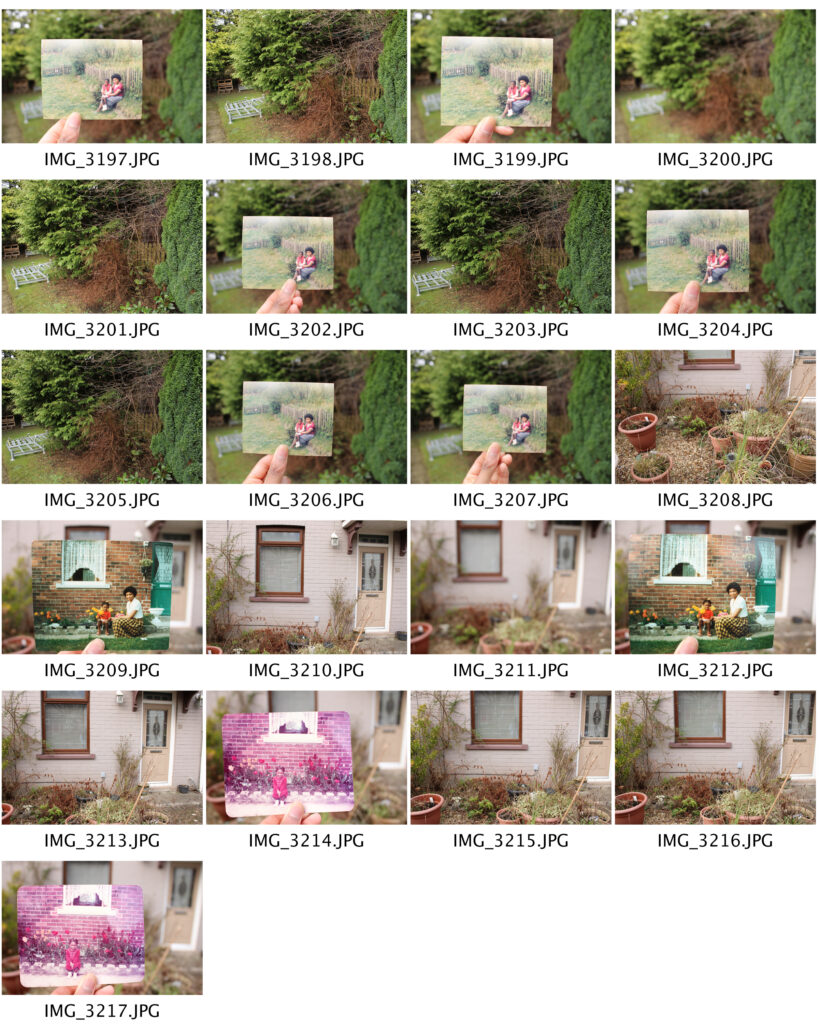
The shutter speed for these photos was between 1/125 sec and 1/160 sec to prevent them from being blurry due to my hands shaking as I was taking the pictures and holding up the photos of my mum and grandmother (both at the same time each with one hand). A problem that I ran into during this shoot was achieving a deep depth of field. I wanted everything both far away (the scene in the frame) and close to the camera (the printed picture) to be in focus but could not use a large f-number as it would make the images too dark. I also did not want to increase the ISO to anything over 400 to avoid noise and my pictures being too grainy. To solve this problem, I took a photo first with the printed picture in full focus, before removing it to photograph only the background in full focus. I did this with the intention of making a composite image in photoshop, with only the focused photos edited together.
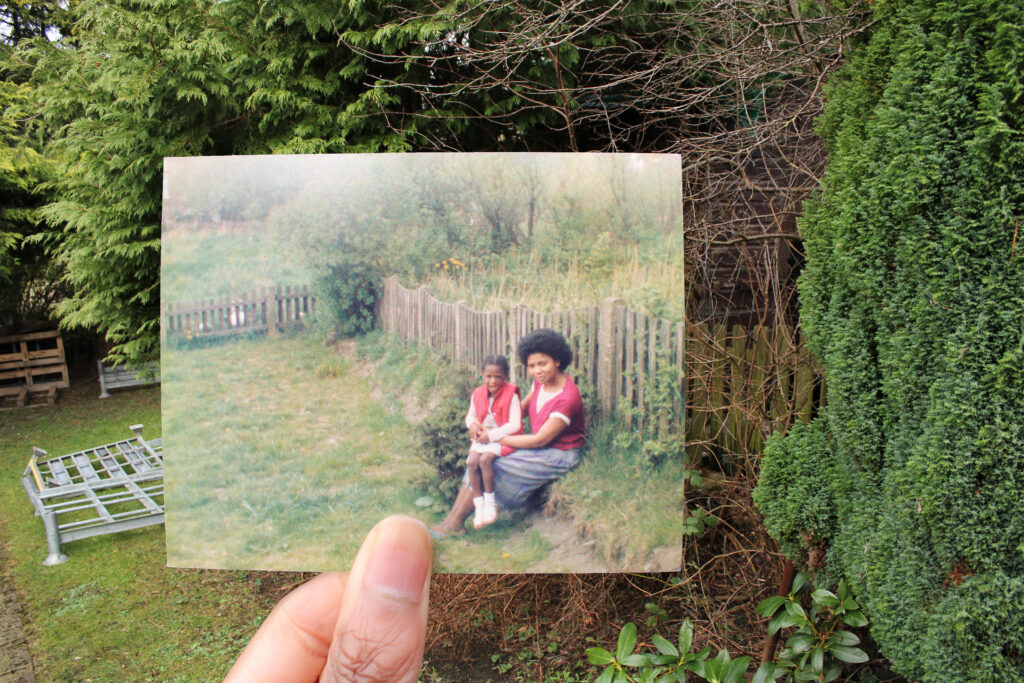
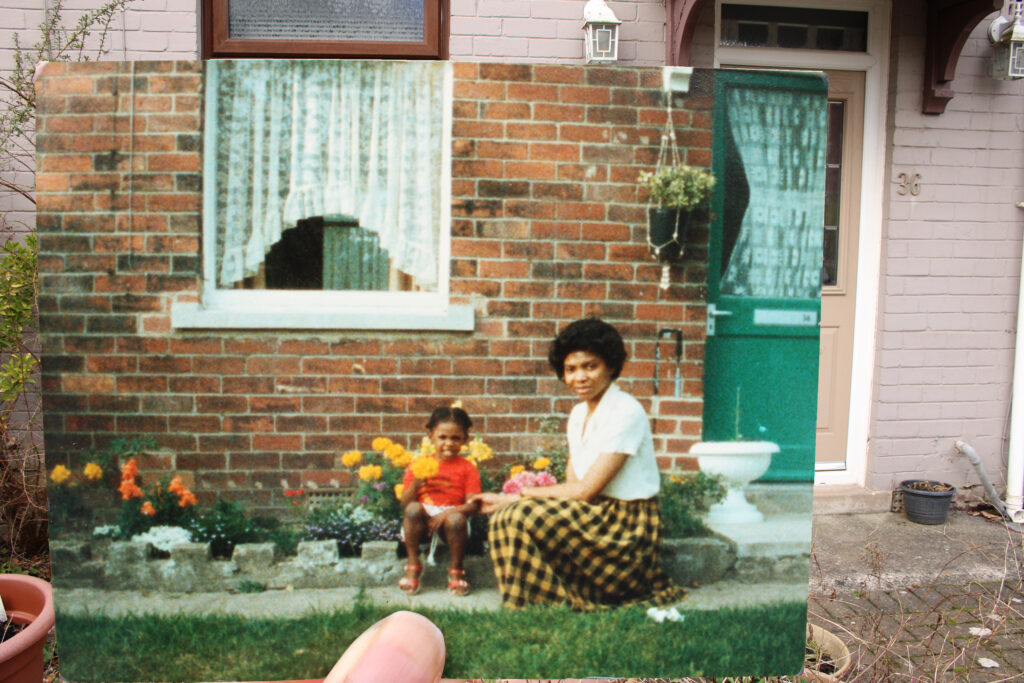
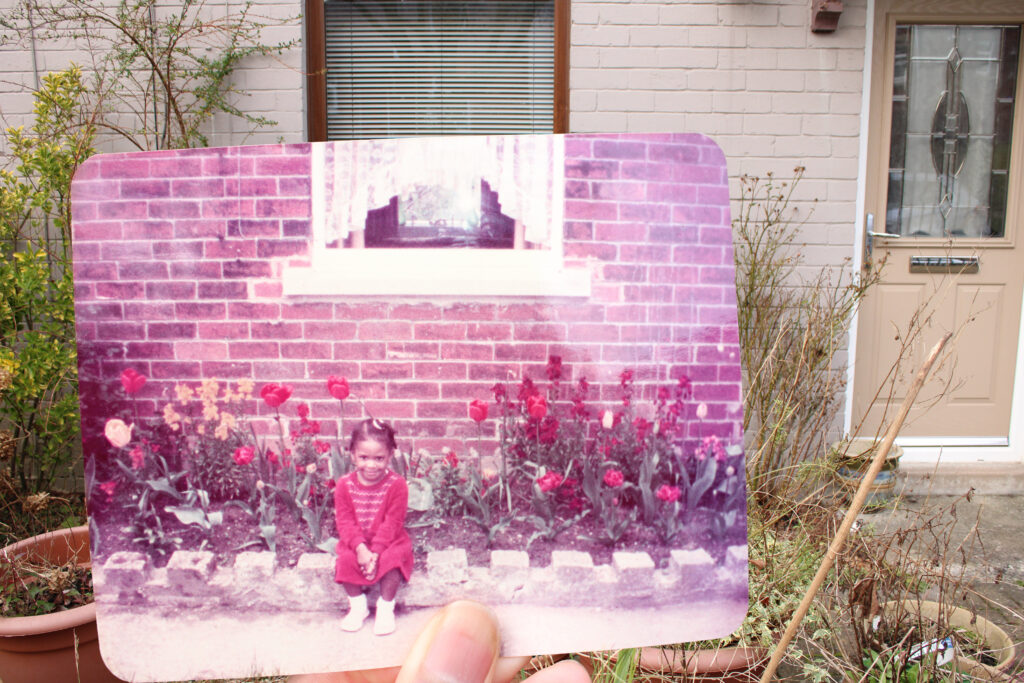
To edit these photos, I used the quick selection tool to select the printed picture and my fingers before copying and pasting it onto a fully focused photo of the background behind it. I then made some slight adjustments to the size and position of the photo if needed, such as accurately lining up the fence, door and window.
I really like how these first three photos of the project turned out as, like Jason Powell’s images, they all show how much a place can change over time, highlighting the stark differences between past and present. I notice this in things like the door and window being changed, along with the house being painted at some point. Some aspects of these pictures also represent growth and development. This is shown not only by the ages of the people in them, but even the drastic change in size of the tree over the passing decades (first image). Also the quality of the printed photo compared to the whole image can even link to technological advancements over the years.