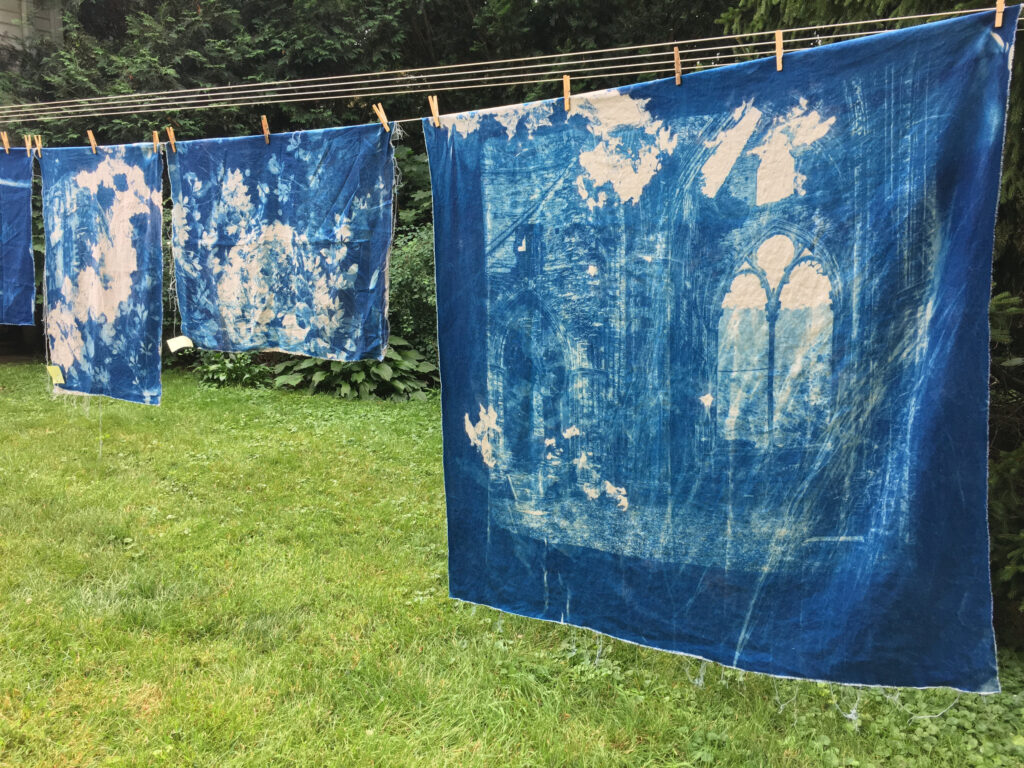
Cyanotype photography is a camera-less technique that involves laying an object on a surface coated with a solution of iron salts before exposing it to UV light and washing with water, to create stunning white and Prussian blue images. This historical printing process was invented in 1842 by Sir John Herschel and is also known as ‘sun prints’ or ‘blueprint process’.
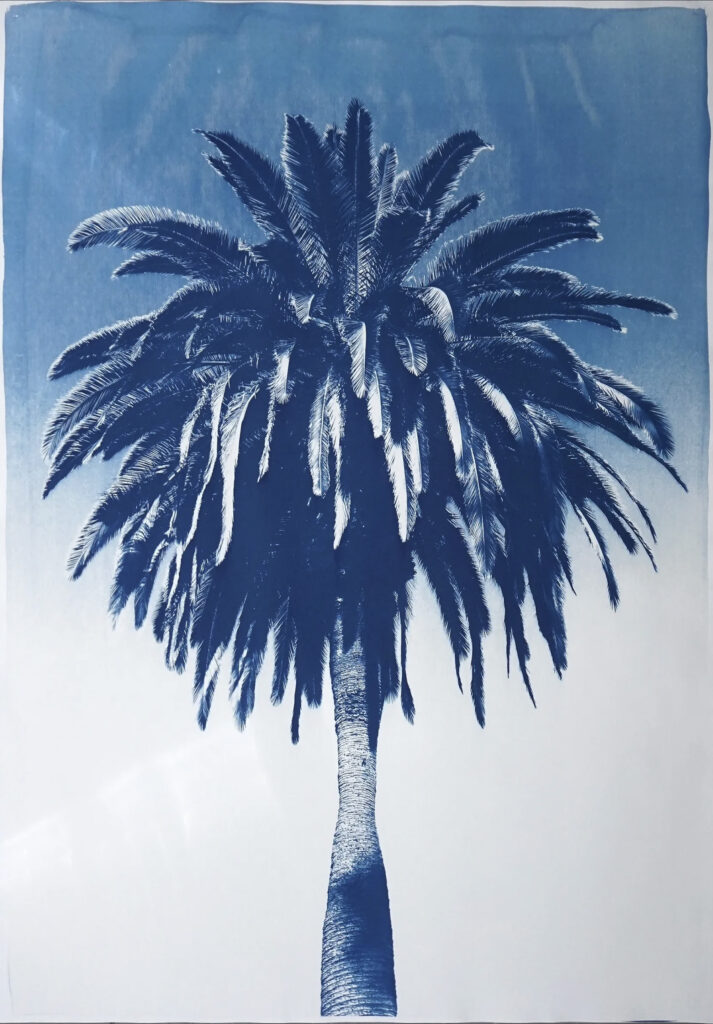
Benefits of using Cyanotype Printing:
- Creates striking blue and white images
- Far more affordable compared to other photo processes
- Can be done at home without a darkroom
- Versatile as it works with both digital negatives and physical objects
- Perfect for carrying out creative experimentations
Additionally, cyanotype printing works on a wide range of surfaces, such as wood, fabric, glass, ceramic or anything made of natural fibre. Photograms can be made with plants, feathers, lace, transparent drawings, photos printed on transparency film, X-rays and photo negatives.