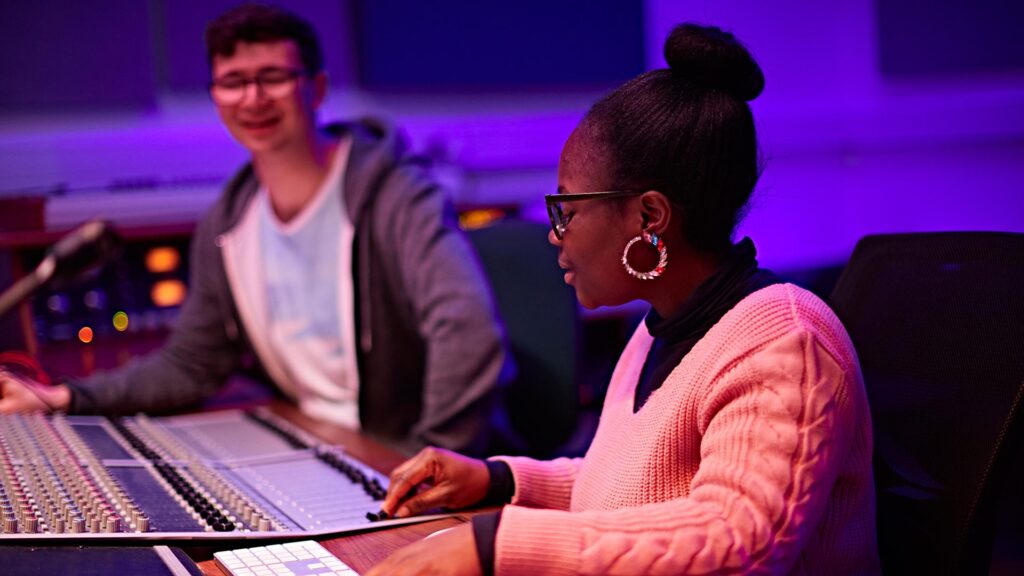
community music tends to happen in care homes, hospices, hospitals, prisons and mostly festivals etc. Normally these music events are done in workshops or are projects for young or old people to enjoy the music and have fun or even celebrate.
the value you can get from this is inclusivity. This focuses on the participitation and cultural democracy, not just the performance aspect making the music accessible to everyone.
Another value to get from this is an improvement to your wellbeing. listening to music can improve mental health and helps by providing creative expression, especially when creating your own.
one more value you can get by participating in music is skill development. You can improve your personal skills or musical skills and even employability skills through by taking part in performance and music creation and production of a live event.
https://www.soundsense.org/about-community-music
This website explains that community music is not limited to a specific place or type of group. A “community” can be any group of people connected by shared interests, experiences, or backgrounds — not just people who live in the same area. This means community music can happen anywhere and with many different kinds of people.
The text also challenges the idea that only “talented” or trained people can make music. It suggests that many people feel excluded because they lack confidence, opportunity, or resources — not because they lack ability. Community music aims to remove those barriers.
https://paperlantern.eu/en/what-is-community-music
The website explains that community music is a powerful practice that can create positive change in individuals, communities, and institutions. It also highlights that community music is a complex and broad field that is different from areas such as music education or social work. The information shows that community music is guided by shared values, beliefs, and practices used by community musicians around the world.
https://www.musicandresilience.net/about/community-music/
The website explains that music is a natural part of human life and that most societies take part in collective music-making. It points out that much music education today happens one-to-one and often focuses on perfecting traditional repertoire and competing to be the best musician. The information suggests that this approach can reduce cooperation and inclusion, and that music can instead be taught in more collaborative ways that better reflect its social nature.