National News and Events
Declaration of war
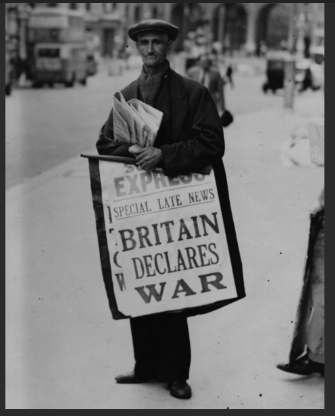
World War 2 started on the 1st of September 1939 when Germany Invaded Poland, two days later on the 3rd of September 1939 The prime minister at the time Neville Chamberlain announced through the BBC radio that the United Kingdom would be going to war with Nazi Germany when they failed to withdraw there troops from Poland after being warned by Britain and France. At the end of World War 1 the Germans agreed to the “Treaty of Versailles” (the national archives, 2019) which was a treaty that formally ended World War 1 and put harsh terms on Germany including them taking full accountability for world war 1 other wise known as the “war guilt clause”, territorial losses including 10% European territory and all of its overseas colonies and significant reparations meaning that they had to take a substantial amount for damages caused by the War.
Operation pied piper
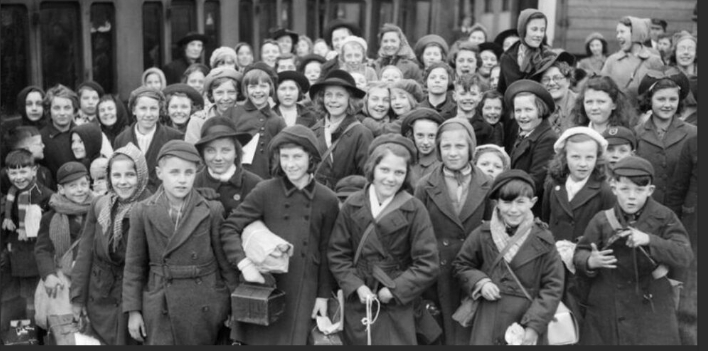
From the summer of 1939 Britain had the largest mass movement of people in British history in which over 1.5million children, expecting mothers and disabled individuals were evacuated to the countryside all around the United kingdom to avoid mass air raids and bombings of capital city’s.
A new old prime minister
On the 10th of May 1940 The current prime minister Neville Chamberlain resigned and the former prime minister Winston Churchill once again began the fight for Britain with his former title of PM.
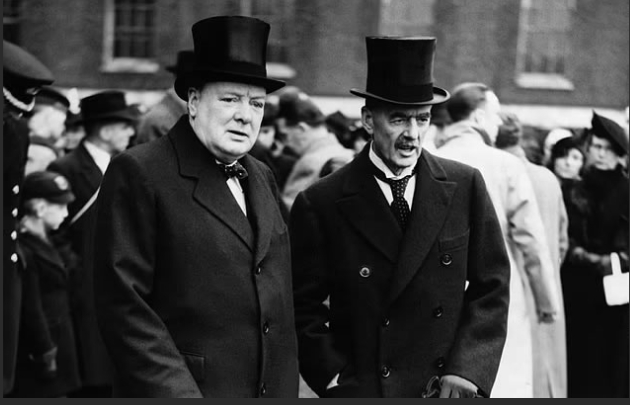
Dunkirk
Between may and June of 1940 Over 330,000 allied groups were rescued and evacuated from the beaches of Dunkirk.
the battle of britain
During the summer and autumn of 1940 The Royal Air Force (RAF) valiantly fought against the German Luftwaffe, subsequently preventing the invasion of Britain from the Germans widely known as Operation Sea Lion.
The blitz
Between September 1940 and May 1941 City’s like London, Manchester and Birmingham were relentlessly bombed by the German Luftwaffe eventually becoming known worldwide as the blitz. Main city’s especially those with ports for bringing supplies in and out of the country were specifically targeted, not to mention city’s with the biggest landmarks. This started the introduction of air raid precautions like the blackout and use of air raid shelters, such as Anderson and Morison shelters.
d-day preparations
During the year of 1944 The South of England becomes a massive military camp in preparation for the D-Day landings in Normandy. Including the presence of thousands of Commonwealth and American troops.
V-Weapons attacks
Between 1944 and 1945 The south of England and London were the targets of the new German V-1 flying bombs and V-2 Rockets causing even further destruction, chaos and casualties.
Victory in europe (ve day)
Germanys surrender is broadcasted on the 7th of May 1945 thus creating Victory day on the 8th of May.
There are historians that disagree about the reason why world war happened. Some believe that it is due to the anger created towards Germany after world war 1 which is why the ‘”Treaty of Versailles” was created 4 years after the end of World War 1. While some historians believe that its was Hitlers aggression that started WW2 however many others believe that it was down to world leaders, including Neville Chamberlain for being too weak. In 1938, Chamberlain introduced a settlement called the Munich agreement
The war then went on for 6 gruelling years until it finally ended on the second of September 1945 after the Germans finally withdrew from the war and surrendered after Hitler committed suicide. There are generally two theories as to how Adulf Hitler ultimately ended his life one being that he shot himself in the head, this being the largley agreed theorie between historians and another that he bit a cyanide capsule to end his life.
On the Home Front!
1939
During the September of 1939 every household in Great Britain was required to complete a form to get identity cards and their first ration books. Petrol was also the rationed during this month and become the first product of many to be rationed the duration of the war. In October of 1939 “Dig for Victory” campaign is presented to the Great British public encouraging people to use their own gardens, local parks and even golf courses to grow vegetables turning them into allotments.
1940
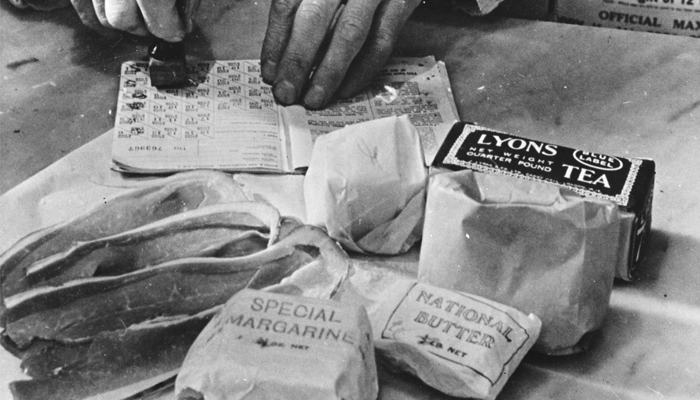
On the 8th of January 1940 food rationing officially begins with sugar, bacon and butter being the first provisions to be rationed. During March of that year all meat is rationed, but by price unlike other provisions amounting to 1s 2d worth per week per adult (1shilling and 2pence). In July of 1940 the commodities cooking fat and margarine were added to list of food now rationed as well as tea. During the winter British government run restaurants opened in which the public could get a free meal without having too use the ration coupons.
1941
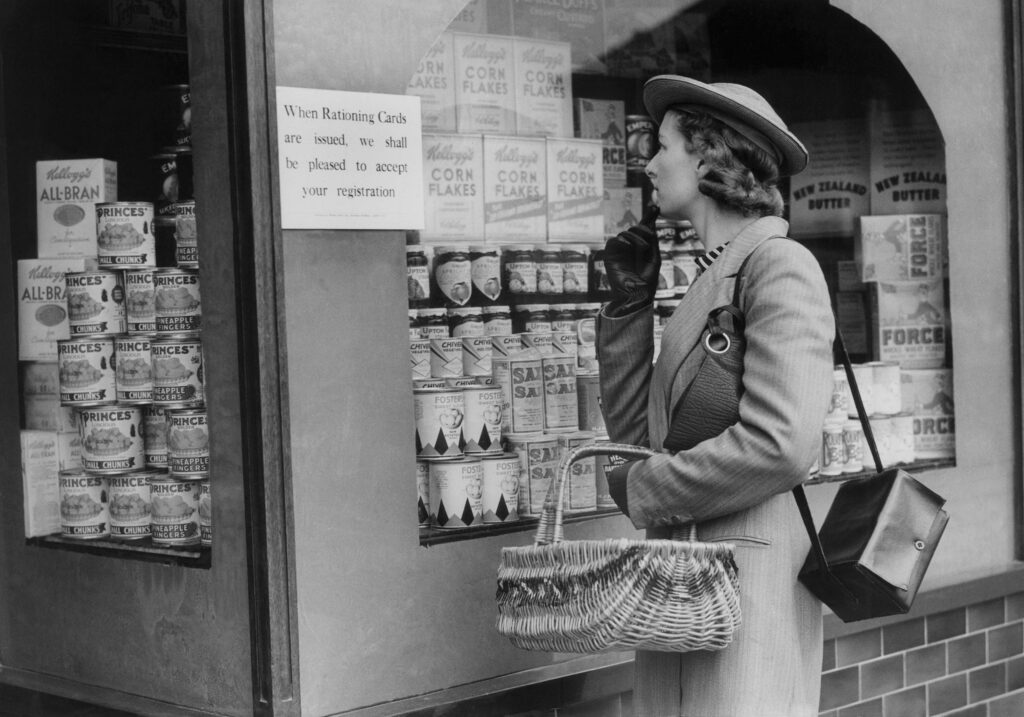
Between March and May of 1941 marmalade, cheese and jam begin to be rationed, in June eggs are rationed as well as the introduction of rationing of clothes. People were allotted 66 coupons per year ( this was later lowered to 24). In late 1941 the points system was introduced to the British public in which people were given a monthly allowance of points that they could spend on ‘luxury’ items such as cereals, biscuits and tinned goods such as spam and peaches.
1942
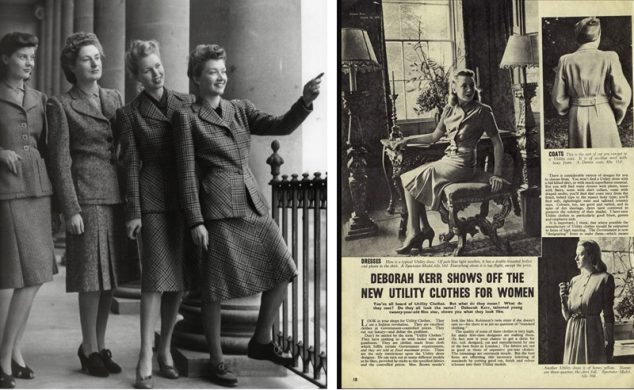
In 1942 the Great British public really began to feel the pinch more than ever before, during February they saw the rationing of soap. They did this so that the government could save oils for food and explosives. In July delicacies like chocolates and sweets, began to be rationed allowing only 2oz per person per week. The government also decided to introduce the CC41 label for clothes and furniture
1943
Vera Lynn
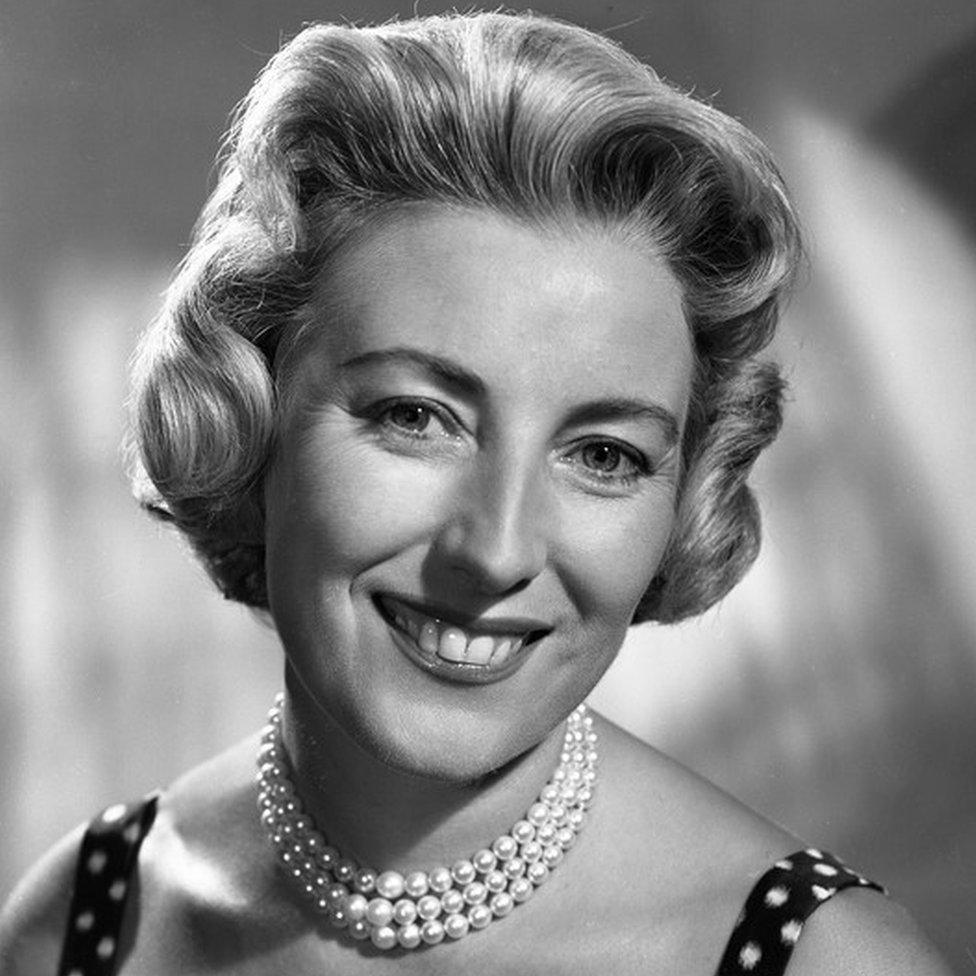
Vera Lynn was born on the 20th of March 1917, in East Ham, London. She was known for her wartime songs such as “we’ll meet again”, “the white cliffs of Dover”, “as time goes by” and many more. Vera was born into a middle class family in East Ham, she started out singing in men’s clubs by the age of seven and by eleven she joined Madame Harris’s Kracker kabaret kids which was a singing troupe. At age 14 vera left school and was spotted by a talent agent who then booked work for her at parties and events. When she was 18 in 1935 she sang the refrain and also started singing on the radio with the Joe Loss orchestra and then the casino club Band.
During ww2 performers such Vera Lynn would go round visiting troops to perform for them and raise there spirits, more specifically Vera Lynn visited a ammunition factory to perform a lunchtime concert in 1941, she would also do tours to several oversee theatres.
Winston Churchill
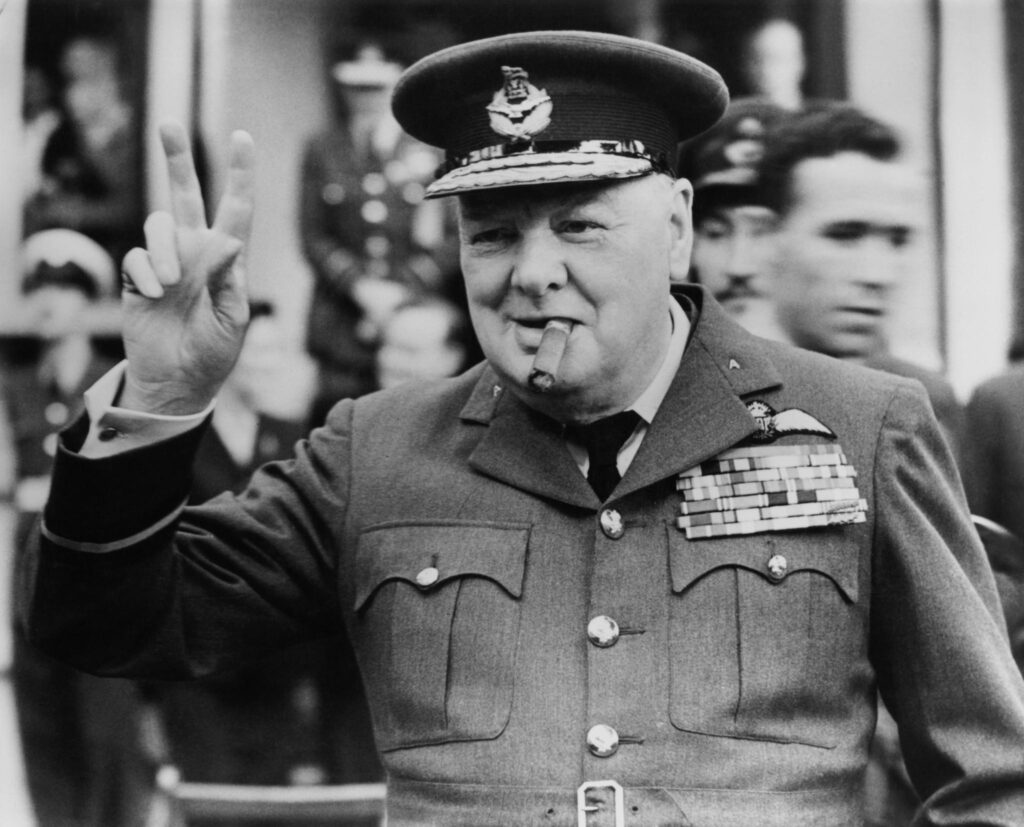
Winston Churchill was born on the 30th of November 1874 and died on the 24th of January 1964. his father was Lord Randolph Churchill, a Tory democrat and his mother was Jenny Jerome, the daughter of a New York businessman. Throughout his life Churchill accomplished many things from being a established writer, an artist, statesman to mention a few of his accomplishments and most importantly he served as the Prime Minister who led Britain into victory during the second world war and then he served again from 1951 to 1955. During his school days Churchill achieved poor school grades but took a special interest into militarism then joining the Royal Calvary in 1895. He spent 5 years in the Royal Calvary touring countries such as Afghanistan, Egypt and south Africa before being elected as a conservative MP for Oldham in 1900. However in 1904 he switched to the Liberal party where he then spent 10 years climbing the ranks before eventually doing a 360 and going back to the Conservative party 2 decades later. In 1929 Churchill lost the Tory election and spent the next 11 years out of office writing and making speeches before finally coming back in to office and 1940 and ultimately becoming Prime Minister succeeding Neville Chamberlin after his vote out of office.
During ww2 going to the cinema became and incredibly popular form of entertainment and pastime, between 25 and 30 millions cinema tickets were sold in Britain. The epic American film ‘Gone with the Wind released in 1940 was the smash hit of the war, but British films such as ‘In which we serve’ realised in 1942 and ‘Millions like us’ released in 1943 were also highly successful. Churchill used to film industry to help boost moral of the great British public through the MOI (The Ministry Of Information). He also teamed up with a Hungarian Jewish Immigrant called Alexanda Korda whom helped MI6 provide cover for agents during the war saying they worked for his company London films. After forming a great friendship over there combined love for screenwriting they created historical dramas such as Lady Hamilton and used them to convince the Americans to join allies during the second world war.
The performing Arts Industry during the War
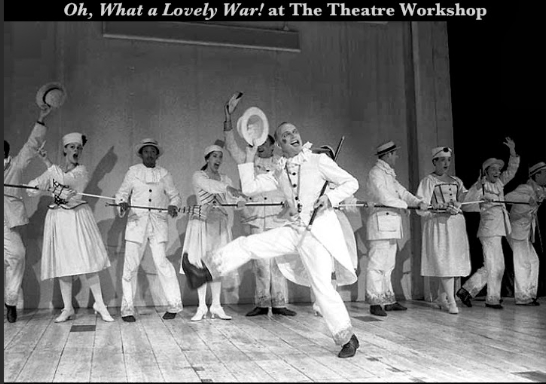
In 1939 Sound City Film Studios now known as Shepperton, a man called Colonel John Turner was put in charge of constructing an elaborate network of dummy airfields and hundreds of decoy sites.(BBC News, 2013) These fake airfields and decoy sites were known as “starfish” and were always located near a potential bombing target of the Luftwaffe. The Germans would use path finders who would go ahead of the bombers and drop incendiary flares into the target sites, these target flares would get extinguished as soon as possible by men on the ground, while the fake airfield would be lit up via wires in the ground by the men nearby. This would give the appearance that they were already under attack and serve as a diversion as the German bombers would then bomb the fake site instead of the real one. These decoys were meant to look realistic enough for the Germans to fall for it so they even created dummy weapons, buildings, barges, tankers, aircraft and even dummy people they were made using canvas and wood which were then camouflaged.
Local builders would be hired and sent to Sound City film studious on a two week training cause to learn how to work the lights. They cleverly used lights to create the effect of an attack already happening, wielding and even the sparks coming off of tracks in areas where trams were in use.
Local news/ WW2 in Bradford and West Yorkshire
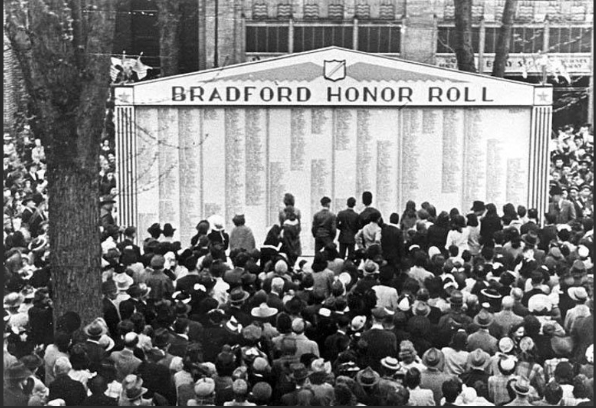
Bradford suffered its biggest air raid attack from the Luftwaffe during the early hours of the morning dropping 120 recorded bombs. This lead to one death and 100 recorded injuries, however the damage it causes was extensive, this included the Lingard’s Department store being destroyed, 10,000 windows were shattered and a audience that were in the Odeon cinema narrowly missed being bombed as a bomb landed in its stalls moments after its audience had left. Between August 1940 and March 1941 there were several smaller incidents in which fatalities did occur, more specifically on the 22nd of November 1940 a single bomb dropped was dropped on Hanson Lane, Halifax and killed 11 people. On the 14th of March 1941 6 more people fell victim to the bombs and lost there lives when 2 bombs were dropped, not only killing them but destroying many houses, in Idle 4 life’s were cut short when a German bomber crashed into a row of cottages and 5 died in Darington when a RAF plane accidentally crashed into there home and destroyed it.
Horrible and or funny angles
The Second World War brought the come about of some interestingly weird recipes and creations that worked around what was available to the British public throughout the duration of the war. Although there were plenty of relatively normal types of food and recipes consumed by the great British during the Second World War such as potatoes in curry sauce, lentil curry, carrot and lentil hotpot, cabbage soup and pickled beetroot just to name a few of them. Vegetables were something that was relatively easy for the public to get their hands on compared to meat, dairy products and eggs. The British public also came out with plenty of weird a wacky recipes to substitute many different meals and deserts that were otherwise unavailable throughout the war and the duration of enforced rationing inside of great Britain. Some weird ration recipes from World War 2 included some different variations of mock meat such as mock duck and mock goose, mock brains (this was a mock of a cow brain or the likes). Other weird recipes included parsnip pudding, wartime loaf and dripping, whale meat, mock banana sandwiches, Cheese pancakes (using dried eggs), and carrot biscuits.
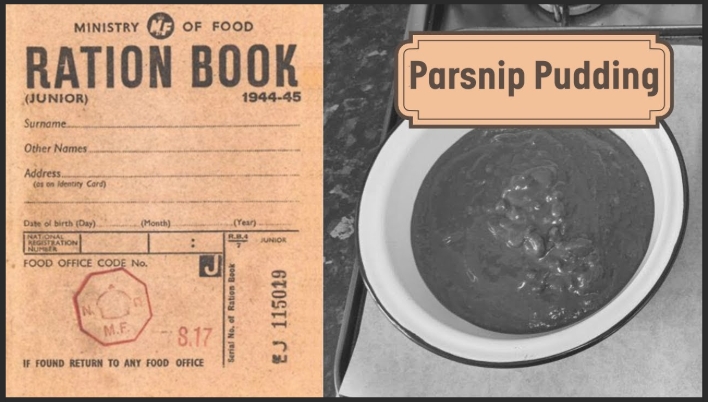
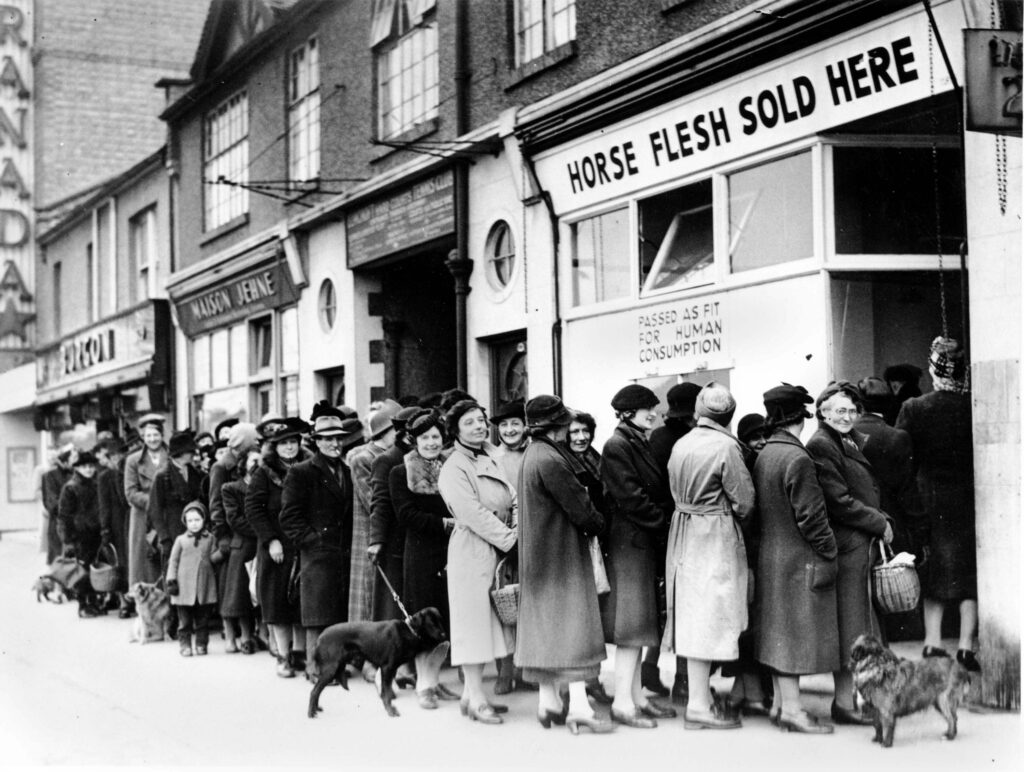
Because meat was rationed so much Horse meat that was previously only sold for the consumption of dogs began to sell for the great British public stating that it was fit for human consumption, it wasn’t rationed but they would have to que up for hours to obtain some and make it to the dinner table. Another weird meat of sorts that made its way to the British dinner table was whale meat, allegedly it tastes as it sounds. A tough, fishy meat that had to be soaked over night, steam cooked and then soaked again before being covered in a sauce before eating.
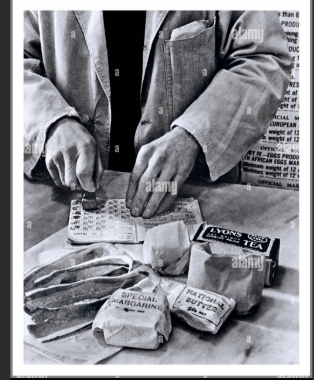
Rationing was so serious that if a butcher were to perhaps give a person a little bit extra under the counter regardless to what was legally aloud per person/ family per week, the butcher could potentially go to prison!. Because tea was a saving grace for people in Britain during world war 2 helping raise the national morale when tea was rationed to only 2oz pp per week (roughly enough for 2-3 cups a day) the British people came of with some inventive ways to make it last. People would do things such as mixing it with fillers like dried herbs and even burnt toast or grains or simple just reuse the pot by not chucking away the leaves the first round and pouring hot water into the used leaves.
During the second world war Britain was very much about ‘make do and mend’ due to clothes being rationed from 1941 until 1949. The women of Britain had to get very creative, even recycling bailed out of parachutes, into waterproof macs, luxurious undergarments and even wedding dresses if the parachute were silk. Leather was so scarce and hard to get a hold of so they would make the soles of shoes out of wood and use rubber from a bike tire to put a thin layer over the wood to prevent the horrible clacking sound they created.
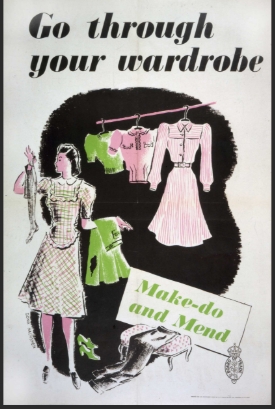
All different varieties of pamphlets were dispatched to the great British public informing them of how to repair old garments and give them new life make them last twice as long. Pamphlets were also given out instructing and giving ideas on how to turn old garments into new ones such as turning old trousers into shorts. Unpicking unwanted woolen jumpers, knitting them into something brand new and turning men’s clothes into women’s clothes and women’s into men’s. Any scraps left over would be used to make pockets to cover holes that had been mended or used to mend other garments. Nothing would go to waste or be thrown away.
Woman during the second world war had to go to extreme lengths to look there best due to clothing rationing and scarcity being able to get necessary clothing item’s. They would paint there legs in gravy and paint a line down the back when they could no longer continue using there old, worn out stocking. Some women would use beetroot for rosy cheeks or for red lips, it was also common for a burnt cork and petroleum jelly to be mixed together to fill in lashes and eyebrows.
operation mincemeat
During world war 2 a secret top mission occurred carried out by MI5 and MI6 in which the body of a dead man was used to trick the Germans into believing that the Allies intended to invade Greece and Sardinia rather than there actual target Sicily. The brains behind the idea belonged to Ewen Montagu and Charles Cholmondeley together they came up with a plan that became one of the most successful deceptions of the Second World War. The body of a homeless man who had died on the streets of London named Glyndwr Michael, was given a completely new identity and released near the coast of Spain with the intentions of it falling into German hands.
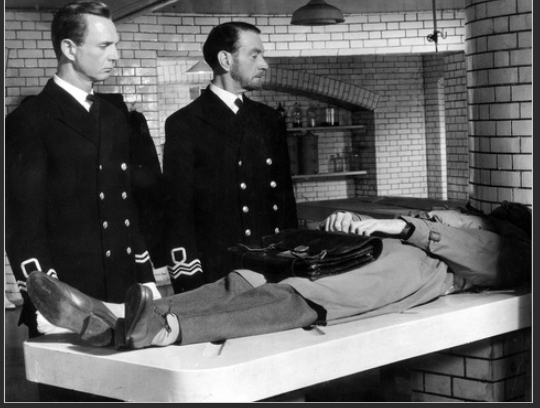
Ewen and Charles took the body of a poor homeless man believed to have had no family and gave him a brand new identity in death as that of a great naval officer. They placed briefcase containing fake top secret information within on Glyndwr, alongside indications of his new identity to make it more believable for the Germans. Thousands of allied life’s were saved by this unconventional but fool proof plan thus a operation that would go down in history and wouldn’t be confirmed officially true until 1998. Although Glyndwr was never officially awarded any military medals once his body was recovered from Spain he was buried with fully military honors and was given officially recognition in 1998.
TV show research
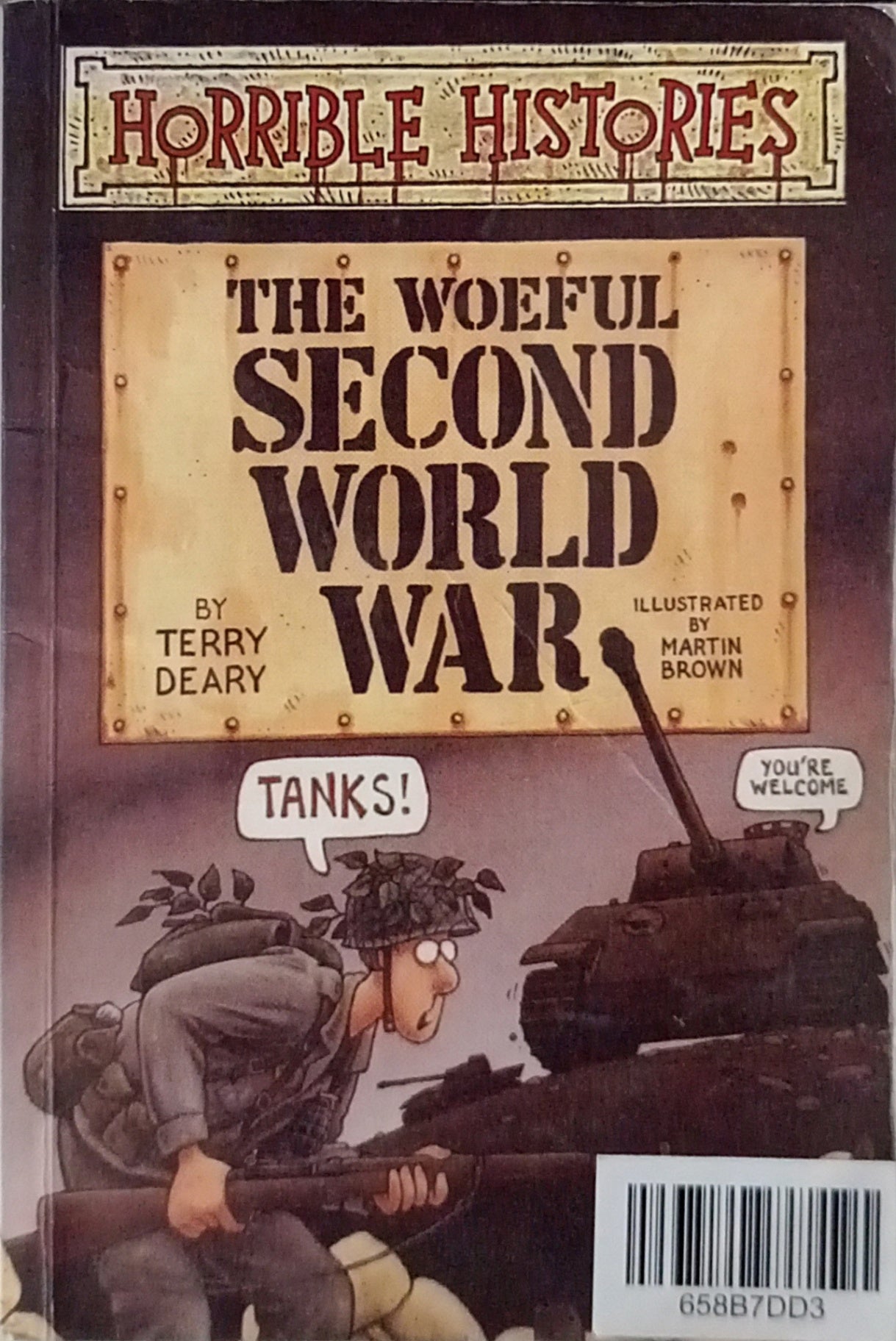
The Horrible Histories TV series is a multimedia franchise first making its debut on the 16th of April 2009 based on the book series, written by Terry Dreary in 1993. Produced by Lion Television and aired on the BBC and CBBC. It is a children’s historical comedy series aimed at making history a little less boring for younger audiences. Thus allowing children from younger ages to engage their interests for history, whether its ‘terrible Tudors’, ‘measly Middle Ages’, the ‘vile Victorians’ or the ‘woeful second world war’ and the many other important parts of history. There has been 11 series and 154 episodes of Horrible Histories between 2009 and 2014, with many additional spin offs and specials.
The show itself follows free rules in which that it must be 1. horrible, 2. it must be funny, and 3. it must be true. By following these rules it has a way of making history that is otherwise boring to the younger generation funny and relatable to them in our current era. It doesn’t just teach children about the great men and woman of history, not just the villains that have plagued our history’s. Horrible Histories entices the younger audience because its shows them lives of ordinary people and their children and just how dark, disgusting and gross reality of peoples day to day lives. Things that are normally classed as taboo subjects such as how they used to go to the toilet throughout history and how diseases and death really spread and caused destruction but in a light easy to swallow manor. For example stupid deaths is a great way of telling children about death but without the emotional baggage that death in the real world (not being silly) can be.
Bibliography
(the national archives, (2019) The Treaty of Versailles, Available from: https://www.nationalarchives.gov.uk/explore-the-collection/stories/the-treaty-of-versailles/ [accessed: 15/10/2025]
(BBC, (2023) World War Two; How Britain declared war against Germany, Available from: https://www.bbc.co.uk/newsround/49562683 [accessed: 15/10/2025]
(BBC, (2013) How the British film industry helped win World War II, Available from: How the British film industry helped win World War II – BBC News [accessed: 28/09/2025]
(The 1940’s experiment, (2025) The 1940’s experiment, Available from: https://the1940sexperiment.com/100-wartime-recipes/ {accessed on 17/10/2025}
(Northern Ireland war memorial museum, (2025) Wartime Recipes, Available from: https://www.niwarmemorial.org/learning/resources/wartime-recipe-mock-banana-sandwiches {accessed on 18/10/2025}
(Jewish News, (2019) Winston Churchill, the Jewish mogul, and the films that ‘swayed Americans to war’. Available from https://www.google.com/amp/s/www.jewishnews.co.uk/winston-churchill-the-jewish-mogul-and-the-films-that-swayed-america-to-war/amp/ {accessed on the 19/10/2025}
(History of government, (2015) Chaos and Censorship in the Second World War, available from https://history.blog.gov.uk/2014/09/12/chaos-and-censorship/ {accessed on the 19/10/2025}
Macintyre, B. (2010) Operation Mincemeat, London: Bloomsbury, {accessed on the 20/11/2025}
Imperial War Museum. (2005) The Victory in Europe Experience: From D-Day to the Destruction of the Third Reich. London: Carlton Books {Accessed on the 30/12/2025}